Anti-Tyrosine Hydroxylase Antibody (Ascites) (LNC1)
Our mouse Tyrosine Hydroxylase (TH) monoclonal antibody from Antibodies Incorporated is produced in-house from clone LNC1. It detects chicken, frog, human, lizard, monkey, mouse, rat, vole, and zebrafish Tyrosine Hydroxylase (TH) and is ascites fluid. Works in WB, IHC, ICC, IP, ELISA.
Chicken, Frog, Human, Lizard, Mouse, Non-Human Primate, Rat, Vole, Zebrafish
ELISA, ICC, IHC, IP, WB
Mouse
SKU: 76-700
Ships: 1-2 business days
Product Details
Tyrosine 3-monooxygenase
TH is the rate-limiting enzyme in the synthesis of the catecholamine neurotransmitters dopamine, epinephrine, and norepinephrine and is responsible for converting L-tyrosine to L-dopa. Synthesis of catecholamines is regulated by the interaction of TH with its’ cofactor, tetrahydrobiopterin (BH4) and the substrates L-tyrosine and molecular oxygen. In humans four TH mRNA splice variants (hTH1-hTH4) have been isolated while subprimate species rely on a single form of TH. It is known that the hTH1-hTH4 variants are identical in their catalytic domain but differ in their N-terminal regulatory domains. Importantly, LNC1 reacts with the catalytic domain of TH and thus with all four isoforms of human TH. The role of TH in the synthesis of catecholamine neurotransmitters suggests a connection between the enzyme and a number of neuropathogenic diseases characterized by irregular catecholamine levels, such as Parkinson's disease, schizophrenia, and dystonia, as well as a variety of cardiovascular diseases.
Ascites
Monoclonal
LNC1
IgG1
ELISA, ICC, IHC, IP, WB
Mouse
TH, TYH, EC 1.14.16.2
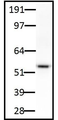
59-63 kDa
Tyrosine Hydroxylase purified from PC12 cells
Chicken, Frog, Human, Lizard, Mouse, Non-Human Primate, Rat, Vole, Zebrafish
AB_2940724
Liquid
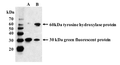
Each new lot of this antibody is tested to confirm that it recognizes a single immunoreactive band of expected molecular weight when used to probe rat brain lysate.
These antibodies are to be used as research laboratory reagents and are not for use as diagnostic or therapeutic reagents in humans.
United States
Dystonia 14; Tyrosine 3-monooxygenase; DYT14; DYT5b; EC 1.14.16.2; OTTHUMP00000011225; OTTHUMP00000011226; ple; Protein Pale; TH; The; TY3H_HUMAN; TYH; Tyrosine 3 hydroxylase; Tyrosine 3 monooxygenase; Tyrosine 3-hydroxylase; Tyrosine 3-monooxygenase; Tyrosine hydroxylase
P07101
UniProt Summary: Catalyzes the conversion of L-tyrosine to L-dihydroxyphenylalanine (L-Dopa), the rate-limiting step in the biosynthesis of catecholamines, dopamine, noradrenaline, and adrenaline. Uses tetrahydrobiopterin and molecular oxygen to convert tyrosine to L-Dopa. In addition to tyrosine, is able to catalyze the hydroxylation of phenylalanine and tryptophan with lower specificity. Positively regulates the regression of retinal hyaloid vessels during postnatal development.
7054