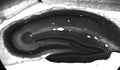
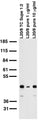
Anti-PICK1 Antibody (L20/8)
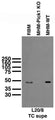
Our mouse PICK1 monoclonal antibody from NeuroMab is produced in-house from clone L20/8. It detects human, mouse, and rat PICK1 and is purified by Protein A chromatography. KO validated. Works in WB, IHC, ICC, IP, ELISA.
Human, Mouse, Rat
ELISA, ICC, IHC, IP, WB
Mouse
SKU: 75-040
Ships: 1-2 business days
Product Details
PICK1
PRKCA-binding protein or PICK1 scaffold is encoded by the gene PICK1. PICK1 is a scaffold protein which acts as an adaptor protein that binds and organizes the location of membrane proteins. Functions to cluster receptors and plays a role in synaptic plasticity. PICK1 is ubiguitously expressed and found in high levels in brain and testis. Cellularly, PICK1 is found at perinuclear region, mitochondria and synapses. Diseases associated with PICK1 include Spermatogenic Failure and Depression.
Purified by Protein A chromatography
1 mg/mL
Monoclonal
L20/8
IgG2a
ELISA, ICC, IHC, IP, WB
Mouse
PICK1 PRKCABP
45 kDa
Fusion protein amino acids 10-130 of human PICK1 (accession number AAG48152) produced recombinantly in E. Coli
Human
Human, Mouse, Rat
AB_2164544
Aliquot and store at ≤ -20°C for long term storage. For short term storage, store at 2-8°C. For maximum recovery of product, centrifuge the vial prior to removing the cap.
Liquid
Produced by in vitro bioreactor culture of hybridoma line followed by Protein A affinity chromatography. Purified mAbs are >90% specific antibody.
10 mM Tris, 50 mM Sodium Chloride, 0.065% Sodium Azide pH 7.4
Unconjugated
No cross-reactivity reported
Each new lot of antibody is quality control tested by western blot on rat whole brain lysate and confirmed to stain the expected molecular weight band.
These antibodies are to be used as research laboratory reagents and are not for use as diagnostic or therapeutic reagents in humans.
United States
24 months from date of receipt
PICK; PRKCA-binding protein; Protein interacting with C kinase 1; Protein kinase C-alpha-binding protein
Q9NRD5
UniProt Summary: Probable adapter protein that bind to and organize the subcellular localization of a variety of membrane proteins containing some PDZ recognition sequence. Involved in the clustering of various receptors, possibly by acting at the receptor internalization level. Plays a role in synaptic plasticity by regulating the trafficking and internalization of AMPA receptors. May be regulated upon PRKCA activation. May regulate ASIC1/ASIC3 channel. Regulates actin polymerization by inhibiting the actin-nucleating activity of the Arp2/3 complex; the function is competitive with nucleation promoting factors and is linked to neuronal morphology regulation and AMPA receptor (AMPAR) endocytosis. Via interaction with the Arp2/3 complex involved in regulation of synaptic plasicity of excitatory synapses and required for spine shrinkage during long-term depression (LTD). Involved in regulation of astrocyte morphology, antagonistic to Arp2/3 complex activator WASL/N-WASP function.
9463
Shipped on ice packs