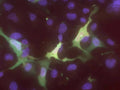
Anti-DNMT3L Antibody (N117/9)
Our mouse DNMT3L monoclonal antibody from NeuroMab is produced in-house from clone N117/9. It detects human DNMT3L and is purified by Protein A chromatography. Works in WB, ICC, ELISA.
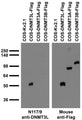
Human
ELISA, ICC, WB
Mouse
SKU: 75-153
Ships: 1-2 business days
Product Details
DNMT3L
DNA (cytosine-5)-methyltransferase 3-like or DNMT3L is encoded by the gene DNMT3L. DNMT3l is a nuclear, catalytically inactive, regulatory factor of DNA methyltransferases. DNMT3L mediates transcriptional repression through interaction with histone deacetylase 1. It is thought to be required for the establishment of maternal genomic imprints. DNMT3L is expressed in several tissues including testis, ovary, and thymus. Diseases associated with DNMT3L include Testicular Spermatocytic Seminoma and Immunodeficiency-Centromeric Instability-Facial Anomalies Syndrome.
Purified by Protein A chromatography
1 mg/mL
Monoclonal
N117/9
IgG1
ELISA, ICC, WB
Mouse
DNMT3L
45 kDa
Fusion protein amino acids 1-387 (full-length) of human DNMT3L (accession number BAA95556) produced recombinantly in E. Coli
Human
Human
AB_10673565
Aliquot and store at ≤ -20°C for long term storage. For short term storage, store at 2-8°C. For maximum recovery of product, centrifuge the vial prior to removing the cap.
Liquid
Produced by in vitro bioreactor culture of hybridoma line followed by Protein A affinity chromatography. Purified mAbs are >90% specific antibody.
10 mM Tris, 50 mM Sodium Chloride, 0.065% Sodium Azide pH 7.79
Unconjugated
No cross-reactivity against DNMT3A or DNMT3B
Each new lot of antibody is quality control tested on cells overexpressing target protein and confirmed to give the expected staining pattern.
These antibodies are to be used as research laboratory reagents and are not for use as diagnostic or therapeutic reagents in humans.
United States
24 months from date of receipt
DNA (cytosine-5-methyltransferase 3-like; DNA; cytosine-5-methyltransferase 3-like protein; cytosine-5-methyltransferase 3-like; human cytosine-5-methyltransferase 3-like protein
BAA95556
UniProt Summary: Catalytically inactive regulatory factor of DNA methyltransferases that can either promote or inhibit DNA methylation depending on the context. Essential for the function of DNMT3A and DNMT3B: activates DNMT3A and DNMT3B by binding to their catalytic domain. Acts by accelerating the binding of DNA and S-adenosyl-L-methionine (AdoMet) to the methyltransferases and dissociates from the complex after DNA binding to the methyltransferases. Recognizes unmethylated histone H3 lysine 4 (H3K4me0) and induces de novo DNA methylation by recruitment or activation of DNMT3. Plays a key role in embryonic stem cells and germ cells. In germ cells, required for the methylation of imprinted loci together with DNMT3A. In male germ cells, specifically required to methylate retrotransposons, preventing their mobilization. Plays a key role in embryonic stem cells (ESCs) by acting both as an positive and negative regulator of DNA methylation. While it promotes DNA methylation of housekeeping genes together with DNMT3A and DNMT3B, it also acts as an inhibitor of DNA methylation at the promoter of bivalent genes. Interacts with the EZH2 component of the PRC2/EED-EZH2 complex, preventing interaction of DNMT3A and DNMT3B with the PRC2/EED-EZH2 complex, leading to maintain low methylation levels at the promoters of bivalent genes. Promotes differentiation of ESCs into primordial germ cells by inhibiting DNA methylation at the promoter of RHOX5, thereby activating its expression.
29947
Shipped on ice packs