
Anti-TrpV1 Antibody (BSA and Azide free) (N221/17)
Our mouse TrpV1 carrier-free monoclonal antibody from NeuroMab is produced in-house from clone N221/17. It detects mouse and rat TrpV1 and is purified by Protein A chromatography. Works in WB, IHC, ICC, ELISA.
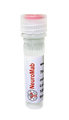
Mouse, Rat
ELISA, ICC, IHC, WB
Mouse
SKU: 75-254-CF
Ships: 1-5 business days
Product Details
TrpV1
Transient receptor potential cation channel subfamily V (vanilloid) member 1, or TrpV1 is a member of transient receptor potential cation channel family(TRP channel).TrpV1 is a non-selective, ligand activated calcium permeant cation channel that is widely expressed in tissues but elevated in dorsal root ganglia, highly but not solely expressed in postsynaptic dendritic spines. TrpV1 is involved in heat and chemical detection and in pain perception.
Purified by Protein A chromatography
Lot dependent: provided at 0.6-1.0 mg/mL
Monoclonal
N221/17
IgG1
ELISA, ICC, IHC, WB
Mouse
Trpv1 Vr1 Vr1l
100 kDa
Fusion protein amino acids 1-160 (cytoplasmic N-terminus) of rat TrpV1 (accession number O35433) produced recombinantly in E. Coli
Rat
Mouse, Rat
Aliquot and store at ≤ -20°C for long term storage. For short term storage, store at 2-8°C. For maximum recovery of product, centrifuge the vial prior to removing the cap.
Liquid
Produced by in vitro bioreactor culture of hybridoma line followed by Protein A affinity chromatography and buffer exchanged into 1X PBS. Purified mAbs are >90% specific antibody.
PBS
Unconjugated
No cross-reactivity reported
Each new lot of antibody is quality control tested by western blot on rat whole brain lysate and confirmed to stain the expected molecular weight band.
These antibodies are to be used as research laboratory reagents and are not for use as diagnostic or therapeutic reagents in humans.
United States
12 months from date of receipt
TRPV1_SON; Transient receptor potential cation channel subfamily V member 1; Vr1l1; TrpV1; deltaN-TRPV1; Capsaicin receptor; vanilloid receptor 1; Osm-9-like TRP channel 1; vanilloid receptor type 1 like protein 1; OTRPC1; vanilloid type 1 receptor; Vanilloid receptor type 1-like
O35433
UniProt Summary: Non-selective calcium permeant cation channel involved in detection of noxious chemical and thermal stimuli. Seems to mediate proton influx and may be involved in intracellular acidosis in nociceptive neurons. Involved in mediation of inflammatory pain and hyperalgesia. Sensitized by a phosphatidylinositol second messenger system activated by receptor tyrosine kinases, which involves PKC isozymes and PCL. Activation by vanilloids, like capsaicin, and temperatures higher than 42 degrees Celsius. Upon activation, exhibits a time- and Ca(2+)-dependent outward rectification, followed by a long-lasting refractory state. Mild extracellular acidic pH (6.5) potentiates channel activation by noxious heat and vanilloids, whereas acidic conditions (pH <6) directly activate the channel. Can be activated by endogenous compounds, including 12-hydroperoxytetraenoic acid and bradykinin. Acts as ionotropic endocannabinoid receptor with central neuromodulatory effects. Triggers a form of long-term depression (TRPV1-LTD) mediated by the endocannabinoid anandamine in the hippocampus and nucleus accumbens by affecting AMPA receptors endocytosis.
83810
Shipped on ice packs

