Anti-SQSTM1 Antibody
Our Anti-SQSTM1 chicken polyclonal primary antibody from Aves Labs is produced in-house. It detects human, mouse, and rat SQSTM1, and is affinity-purified IgY. Works in ICC, IHC, WB.
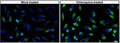
Immunofluorescent staining of mock- or 50 µM chloroquine-treated HeLa cells using 2 µg/mL chicken anti-SQSTM1 (p62) antibody (green). DAPI nuclear stain (blue) shows cell nuclei. The cells were mounted with Antibodies Incorporated Fluoroshield with DAPI mounting medium (Cat. AR-6501). Anti-SQSTM1 (p62) specifically stains the autophagosomes in HeLa cells. Chloroquine treatment increases the levels of SQSTM1 (p62) protein by inhibiting autophagy.
Click on image to zoom
SKU: SQSTM1-0100
Ships: 1-2 business days
Product Details
SQSTM1
Sequestosome 1 (SQSTM1), also known as p62, is a multifunctional adaptor protein involved in autophagy, cell signaling, and protein degradation. It plays a key role in selectively targeting ubiquitinated proteins for degradation via the autophagy-lysosome pathway and is also involved in NF-κB signaling, oxidative stress responses, and bone metabolism. Mutations in SQSTM1 are strongly associated with Paget’s disease of bone and have been implicated in neurodegenerative disorders such as amyotrophic lateral sclerosis (ALS) and certain cancers. Due to its role in cellular homeostasis, SQSTM1 remains a significant focus in research on autophagy-related diseases and targeted therapies.
Affinity-Purified IgY
200 µg/mL
Polyclonal
IgY
ICC, IHC, WB
Chicken
SQSTM1
Calculated - 48 kDa; Observed - 62 kDa
Human SQSTM1 full sequence
Human
Human, Mouse, Rat
Store at 4°C in the dark. Under these conditions, the antibodies should have a shelf life of at least twelve months, provided they remain sterile. For longer term storage, aliquot and freeze to avoid freeze-thaw of the antibody.
Liquid
Eggs from hens hyperimmunized with target were used to prepare an IgY fraction which was then subjected to antigen-specific affinity purification.
Phosphate-buffered (10 mM) isotonic (0.9%, w/v) saline (“PBS," pH 7.2) with sodium azide (0.02%, w/v) added as a preservative.
WB: 1:5000 - 1:10000
IHC: 1:100 - 1:200
ICC: 1:100 - 1:200
IHC: 1:100 - 1:200
ICC: 1:100 - 1:200
Unconjugated
No cross-reactivity reported
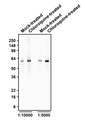
Each new lot of this antibody is tested to confirm that it recognizes a single immunoreactive band of expected molecular weight when used to probe HeLa cell lysate.
These antibodies are to be used as research laboratory reagents and are not for use as diagnostic or therapeutic reagents in humans.
United States
12 months from receipt of product
A170; Sequestosome-1; DMRV; EBI 3 associated protein of 60 kDa; EBI 3 associated protein p60; EBI3 associated protein of 60 kDa; EBI3 associated protein p60; EBI3-associated protein of 60 kDa; EBIAP; FTDALS3; MGC127197; ORCA; OSF-6; Osi; OSIL; Oxidative stress induced like; p60; p62; p62B; Paget disease of bone 3; PDB 3; PDB3; Phosphotyrosine independent ligand for the Lck SH2 domain of 62 kDa; Phosphotyrosine independent ligand for the Lck SH2 domain p62; Phosphotyrosine-independent ligand for the Lck SH2 domain of 62 kDa; PKC-zeta-interacting protein; Protein kinase C-zeta-interacting protein; Sequestosome 1; Sequestosome-1; SQSTM 1; SQSTM_HUMAN; Sqstm1; STAP; STONE14; Ubiquitin binding protein p62; Ubiquitin-binding protein p62; ZIP 3; ZIP; ZIP3; ORCA, OSIL; P62; Autophagy Receptor P62
Q13501
UniProt Summary: Molecular adapter required for selective macroautophagy (aggrephagy) by acting as a bridge between polyubiquitinated proteins and autophagosomes. Promotes the recruitment of ubiquitinated cargo proteins to autophagosomes via multiple domains that bridge proteins and organelles in different steps. SQSTM1 first mediates the assembly and removal of ubiquitinated proteins by undergoing liquid-liquid phase separation upon binding to ubiquitinated proteins via its UBA domain, leading to the formation of insoluble cytoplasmic inclusions, known as p62 bodies. SQSTM1 then interacts with ATG8 family proteins on autophagosomes via its LIR motif, leading to p62 body recruitment to autophagosomes, followed by autophagic clearance of ubiquitinated proteins. SQSTM1 is itself degraded along with its ubiquitinated cargos. Also required to recruit ubiquitinated proteins to PML bodies in the nucleus. Also involved in autophagy of peroxisomes (pexophagy) in response to reactive oxygen species (ROS) by acting as a bridge between ubiquitinated PEX5 receptor and autophagosomes. Acts as an activator of the NFE2L2/NRF2 pathway via interaction with KEAP1: interaction inactivates the BCR(KEAP1) complex by sequestering the complex in inclusion bodies, promoting nuclear accumulation of NFE2L2/NRF2 and subsequent expression of cytoprotective genes. Promotes relocalization of 'Lys-63'-linked ubiquitinated STING1 to autophagosomes. Involved in endosome organization by retaining vesicles in the perinuclear cloud: following ubiquitination by RNF26, attracts specific vesicle-associated adapters, forming a molecular bridge that restrains cognate vesicles in the perinuclear region and organizes the endosomal pathway for efficient cargo transport. Sequesters tensin TNS2 into cytoplasmic puncta, promoting TNS2 ubiquitination and proteasomal degradation. May regulate the activation of NFKB1 by TNF, nerve growth factor (NGF) and interleukin-1. May play a role in titin/TTN downstream signaling in muscle cells. Adapter that mediates the interaction between TRAF6 and CYLD.
8878
Ice packs