
Anti-MANF Antibody
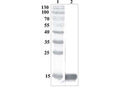
Our Anti-Mesencephalic astrocyte-derived neurotrophic factor (MANF) rabbit polyclonal primary antibody detects human Mesencephalic astrocyte-derived neurotrophic factor (MANF), and is affinity-purified. It is validated for use in WB.
SKU: R-1675-100
Ships: 1-2 business days
Product Details
Mesencephalic astrocyte-derived neurotrophic factor (MANF)
MANF is a trophic factor for midbrain dopamine neurons in vivo. It prevents the 6-OHDA- induced degeneration of dopamine neurons in rodent models of Parkinson's disease (Lindholm et al., 2008, Voutilainen et al., 2009). When administered after 6-OHDA-lesioning it restores the dopaminergic function and prevents degeneration of dopamine neurons in substantia nigra pars compacta.
Affinity-purified
Polyclonal
IgG
WB
Rabbit
Recombinant human MANF protein produced using CHO-based cell line. Immunogen is purified from cell culture supernatant.
Human
Human
Store antibody stock solution at +4°C upon receipt. DO NOT FREEZE. This product is an (NH4)2SO4 precipitate. To use, mix well by pipetting or vortexing gently prior use, then withdraw the desired amount of antibody stock solution and dilute into your antibody dilution buffer and use normally.
Alternatively, material can be centrifuged at 10K x g for 5 minutes and the liquid sulfate solution carefully removed. Then precipitated antibody can be resuspended in 0.1M P, 250 mM NaCL, pH 7.4 solution. The solution should then be divided into working aliquots and stored at -80°C until used. Prevent multiple freeze thaw cycles of aliquots for best product life. Store antibody stock solution at 2-8°C upon receipt. DO NOT FREEZE. This product is an (NH4)2SO4 precipitate. See reconstitution instructions for more information.
Liquid
Concentrated ammonium sulphate in PBS pH 7.4 containing no preservatives.
WB: 1:2000-1:6000
Unconjugated
MANF (Mesencephalic astrocyte-derived neurotrophic factor). No cross-reactivity in MANF-knockout mouse. No cross-reactivity with CDNF in IHC, slightly cross-reacts with purified CDNF in WB. No cross-reactivity with CDNF in IHC, slightly cross-reacts with purified CDNF in WB.
For research use only.
United States
12 months after date of receipt (unopened vial).
ARMET; arginine-rich; mutated in early stage tumors; ARP
P55145
UniProt Summary: Selectively promotes the survival of dopaminergic neurons of the ventral mid-brain. Modulates GABAergic transmission to the dopaminergic neurons of the substantia nigra. Enhances spontaneous, as well as evoked, GABAergic inhibitory postsynaptic currents in dopaminergic neurons. Inhibits cell proliferation and endoplasmic reticulum (ER) stress-induced cell death. Retained in the ER/sarcoplasmic reticulum (SR) through association with the endoplasmic reticulum chaperone protein HSPA5 under normal conditions. Stabilizes HSPA5/BiP in its substrate-bound ADP state, which facilitates HSPA5/BiP incorporation into chaperone-client complexes during endoplasmic reticulum stress, its interaction with HSPA5/BiP inhibits ATP binding to HSPA5/BiP and subsequent nucleotide exchange. As a result acts as a repressor of the unfolded protein response (UPR) pathway. Up-regulated and secreted by the ER/SR in response to ER stress and hypoxia. Following secretion by the ER/SR, directly binds to 3-O-sulfogalactosylceramide, a lipid sulfatide in the outer cell membrane of target cells. Sulfatide binding promotes its cellular uptake by endocytosis, and is required for its role in alleviating ER stress and cell toxicity under hypoxic and ER stress conditions. Essential for embryonic lung development. Required for the correct postnatal temporal and structural development of splenic white pulp. Required for the repair-associated myeloid response in skeletal muscle, acts as a regulator of phenotypic transition towards prorepair macrophages in response to muscle injury and as a result limits excessive proinflammatory signaling. Represses RELA expression and therefore NF-kB signaling in the myocardium, as a result limits macrophage infiltration of injured tissue and M1 macrophage differentiation in response to myocardial injury. Required for endochondral ossification in long bones and the skull during postnatal development.
7873
2-8°C (on cold packs)
Related Products
Recently Viewed
Your research is our top priority
Highly-validated antibodies and reagents from our family of brands.
Support from the source
We make everything we sell. Need help? Ask the experts!
Worldwide distribution network
Our products are used around the globe. Find a distributor near you.
Satisfied or refunded
We are proud of every product that leaves our lab!
- Opens in a new window.

