Anti-Autophagy protein 5 (ATG5) Antibody
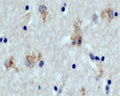
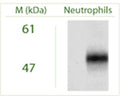
Our Anti-Autophagy protein 5 (ATG5) rabbit polyclonal primary antibody detects human Autophagy protein 5 (ATG5), and is whole serum. It is validated for use in IHC-Frozen, WB.
SKU: R-111-100
Ships: 1-2 business days
Product Details
Autophagy protein 5 (ATG5)
FUNCTION: Required for autophagy. Conjugates to ATG12 and associates with isolation membrane to form cup-shaped isolation membrane and autophagosome. The conjugate detaches from the membrane immediately before or after autophagosome formation is completed. FUNCTION: May play an important role in the apoptotic process, possibly within the modified cytoskeleton. Its expression is a relatively late event in the apoptotic process, occurring downstream of caspase activity. SUBCELLULAR LOCATION: Cytoplasm. Colocalizes with nonmuscle actin. ALTERNATIVE PRODUCTS: 2 named isoforms produced by alternative splicing. TISSUE SPECIFICITY: Ubiquitous. The mRNA is present at similar levels in viable and apoptotic cells, whereas the protein is dramatically highly expressed in apoptotic cells. INDUCTION: By apoptotic stimuli. PTM: Conjugated to ATG12; which is essential for autophagy, but is not required for association with isolation membrane. SIMILARITY: Belongs to the ATG5 family.
Whole serum
Polyclonal
Mixed
IHC, WB
Rabbit
A synthetic peptide corresponding to the C-terminal of human ATG-5L. No immunogenic carrier protein was conjugated to the immunogen. Instead, Adjukine B has been used to orchestrate/boost the immune response.
Human
Human
Spin vial briefly before opening. Reconstitute in 100 µL sterile-filtered, ultrapure water. Centrifuge to remove any insoluble material. After reconstitution keep aliquots at -20°C for a higher stability, and at 2-8°C with an appropriate antibacterial agent. Glycerol (1:1) may be added for an additional stability. Avoid repetitive freeze/thaw cycles.
Lyophilized
WB: 1:200-1:1000
IHC: 1:200-1:1000
ICC: 1:200-1:1000
IHC: 1:200-1:1000
ICC: 1:200-1:1000
Unconjugated
IHC and WB confirmed the specificity for ATG5. Human, not yet tested in other species.
For research use only.
United States
12 months after date of receipt (unopened vial).
APG5; Autophagy protein 5; APG5L; APG5-like; ASP; APG 5; SCAR25; Apoptosis-specific protein; hAPG5; ATG5; APG5 autophagy 5-like; ATG5 autophagy related 5 homolog
Q9H1Y0
UniProt Summary: Involved in autophagic vesicle formation. Conjugation with ATG12, through a ubiquitin-like conjugating system involving ATG7 as an E1-like activating enzyme and ATG10 as an E2-like conjugating enzyme, is essential for its function. The ATG12-ATG5 conjugate acts as an E3-like enzyme which is required for lipidation of ATG8 family proteins and their association to the vesicle membranes. Involved in mitochondrial quality control after oxidative damage, and in subsequent cellular longevity. Plays a critical role in multiple aspects of lymphocyte development and is essential for both B and T lymphocyte survival and proliferation. Required for optimal processing and presentation of antigens for MHC II. Involved in the maintenance of axon morphology and membrane structures, as well as in normal adipocyte differentiation. Promotes primary ciliogenesis through removal of OFD1 from centriolar satellites and degradation of IFT20 via the autophagic pathway. As part of the ATG8 conjugation system with ATG12 and ATG16L1, required for recruitment of LRRK2 to stressed lysosomes and induction of LRRK2 kinase activity in response to lysosomal stress.
9474
25°C (ambient)