
Anti-TALK1 Potassium Channel Antibody (N466/14)
Our mouse TALK1 potassium channel monoclonal antibody from NeuroMab is produced in-house from clone N466/14. It detects mouse and rat TALK1 potassium channel and is purified by Protein A chromatography. Works in IHC, ICC, ELISA.
Mouse, Rat
ELISA, ICC, IHC
Mouse
SKU: 75-461
Ships: 1-2 business days
Product Details
TALK1 potassium channel
Potassium two pore domain channel subfamily K member 16 is encoded by the gene KCNK16. KCNK16 is a member of the two pore domain potassium channel (TC 1.A.1.8) family. KCNK16 is an open rectifier which primarily passes outward current under physiological K+ concentrations. KCNK16 is expressed in the pancreas. Diseases associated with KCNK16 include Birk-Barel Syndrome and Maturity-Onset Diabetes of the Young.
Purified by Protein A chromatography
1 mg/mL
Monoclonal
N466/14
IgG2a
ELISA, ICC, IHC
Mouse
Kcnk16 mCG_5959
30-40 kDa
Fusion protein amino acids 42-94 (first extracellular loop) and 259-292 (cytoplasmic C-terminus) of mouse TALK1 (accession number G5E845) produced recombinantly in E. Coli
Mouse
Mouse, Rat
AB_2716263
Aliquot and store at ≤ -20°C for long term storage. For short term storage, store at 2-8°C. For maximum recovery of product, centrifuge the vial prior to removing the cap.
Liquid
Produced by in vitro bioreactor culture of hybridoma line followed by Protein A affinity chromatography. Purified mAbs are >90% specific antibody.
10 mM Tris, 50 mM Sodium Chloride, 0.065% Sodium Azide pH 7.125
Unconjugated
No cross-reactivity reported
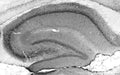
Each new lot of antibody is quality control tested by IHC on either rat or mouse brain and confirmed to give the expected staining pattern.
These antibodies are to be used as research laboratory reagents and are not for use as diagnostic or therapeutic reagents in humans.
United States
24 months from date of receipt
4731413G05Rik; MCG5959; TALK1; Potassium channel; subfamily K; member 16; isoform CRA_a; member 16)
G5E845
UniProt Summary: K(+) channel that conducts voltage-dependent outward rectifying currents upon membrane depolarization. Voltage sensing is coupled to K(+) electrochemical gradient in an 'ion flux gating' mode where outward but not inward ion flow opens the gate. Homo- and heterodimerizes to form functional channels with distinct regulatory and gating properties. In pancreatic islets, conducts K(+) countercurrents for Ca(2+) release from the endoplasmic reticulum (ER) and regulates the frequency and duration of cytosolic Ca(2+) oscillations coupled to secretion of pancreatic hormones. In pancreatic beta cells, drives ER Ca(2+) efflux, which in turn activates Ca(2+)-dependent plasma membrane K(+) slow currents and cytosolic Ca(2+) influx, overall contributing to synchronous cytosolic Ca(2+) oscillations. Limits glucose-induced cytosolic Ca(2+) oscillations coupled to second-phase INS secretion. Contributes to beta cell adaptation to acute inflammation by maintaining normal cytosolic Ca(2+) levels and INS secretion. May regulate beta cell mitochondrial Ca(2+) levels either indirectly via ER Ca(2+) efflux or directly by hyperpolarizing the mitochondrial membrane potential. Limits mitochondrial Ca(2+) oscillations and ATP production involved in glucose homeostasis upon metabolic stress. In pancreatic delta cells, limits Ca(2+)-induced Ca(2+)-release involved in somatostatin secretion and modulates islet paracrine signaling involved in glucagon secretion. Permeable to other monovalent cations such as Rb(+) and Cs(+).
74571
Shipped on ice packs

