
Anti-Iduna/RNF146 Antibody (N201/35)
Our mouse Iduna/RNF146 monoclonal antibody from NeuroMab is produced in-house from clone N201/35. It detects human, mouse, and rat Iduna/RNF146 and is purified by Protein A chromatography. Works in WB, ICC, ELISA.
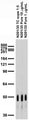
Human, Mouse, Rat
ELISA, ICC, WB
Mouse
SKU: 75-233
Ships: 1-2 business days
Product Details
Iduna/RNF146
E3 ubiquitin-protein ligase RNF146, RING finger protein 146 or Iduna is encoded by the gene RNF146. Iduna is a ubiquitin protein ligase that is involved in ubiquitination and degradation. It is thought to be involved with diverse processes including DNA repair, activation of the Wnt signaling pathway, protection from DNA damage induced cell death. Iduna is found in many tissues including brain, heart, spleen, kidney and liver.
Purified by Protein A chromatography
1 mg/mL
Monoclonal
N201/35
IgG1
ELISA, ICC, WB
Mouse
Rnf146
40 kDa
Fusion protein amino acids 1-359 (full-length) of mouse Iduna (accession number Q9CZW6) produced recombinantly in E. Coli
Mouse
Human, Mouse, Rat
AB_10672248
Aliquot and store at ≤ -20°C for long term storage. For short term storage, store at 2-8°C. For maximum recovery of product, centrifuge the vial prior to removing the cap.
Liquid
Produced by in vitro bioreactor culture of hybridoma line followed by Protein A affinity chromatography. Purified mAbs are >90% specific antibody.
10 mM Tris, 50 mM Sodium Chloride, 0.065% Sodium Azide pH 7.125
Unconjugated
No cross-reactivity reported
Each new lot of antibody is quality control tested by western blot on rat whole brain lysate and confirmed to stain the expected molecular weight band.
These antibodies are to be used as research laboratory reagents and are not for use as diagnostic or therapeutic reagents in humans.
United States
24 months from date of receipt
2610509H23Rik; E3 ubiquitin-protein ligase RNF146; EC 2.3.2.27; RING-type E3 ubiquitin transferase RNF146; Iduna; RING finger protein 146
Q9CZW6
UniProt Summary: E3 ubiquitin-protein ligase that specifically binds poly-ADP-ribosylated (PARsylated) proteins and mediates their ubiquitination and subsequent degradation. May regulate many important biological processes, such as cell survival and DNA damage response. Acts as an activator of the Wnt signaling pathway by mediating the ubiquitination of PARsylated AXIN1 and AXIN2, 2 key components of the beta-catenin destruction complex. Acts in cooperation with tankyrase proteins (TNKS and TNKS2), which mediate PARsylation of target proteins AXIN1, AXIN2, BLZF1, CASC3, TNKS and TNKS2. Recognizes and binds tankyrase-dependent PARsylated proteins via its WWE domain and mediates their ubiquitination, leading to their degradation. Different ubiquitin linkage types have been observed: TNKS2 undergoes ubiquitination at 'Lys-48' and 'Lys-63', while AXIN1 is only ubiquitinated at 'Lys-48'. May regulate TNKS and TNKS2 subcellular location, preventing aggregation at a centrosomal location. Neuroprotective protein. Protects the brain against N-methyl-D-aspartate (NMDA) receptor-mediated glutamate excitotoxicity and ischemia, by interfering with PAR-induced cell death, called parthanatos. Prevents nuclear translocation of AIFM1 in a PAR-binding dependent manner. Does not affect PARP1 activation. Protects against cell death induced by DNA damaging agents, such as N-methyl-N-nitro-N-nitrosoguanidine (MNNG) and rescues cells from G1 arrest. Promotes cell survival after gamma-irradiation. Facilitates DNA repair.
68031
Shipped on ice packs

