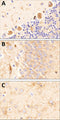
Anti-CSPG4/NG2 Antibody (6203-34)
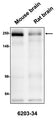
Our mouse CSPG4/NG2 monoclonal antibody from Antibodies Incorporated is produced in-house from clone 6203-34. It detects human, mouse, and rat CSPG4/NG2 and is purified by Protein A chromatography. Works in WB, IHC, ELISA.
Human, Mouse, Rat
ELISA, IHC, WB
Mouse
SKU: 77-523
Ships: 1-2 business days
Product Details
CSPG4/NG2
Neuron-glial antigen 2 (NG2) is a chondroitin sulfate proteoglycan that is encoded by the CSPG4 gene in humans. It is an excellent oligodendrocyte marker. NG2 is a hallmark protein of oligodendrocyte progenitor cells (OPCs) and has been linked with familial schizophrenia (de Vrij, F.M., et al, 2018). NG2 also plays a role in stabilizing cell-substratum interactions during early events of melanoma cell spreading on endothelial basement membranes. It represents an integral membrane chondroitin sulfate proteoglycan expressed by human malignant melanoma cells (Luo, W., et al, 2006). NG2 localizes at the apical plasma membrane and relocalizes to the lamellipodia of astrocytoma upon PRKCA phosphorylation.
Purified by Protein A chromatography
1 mg/mL
Monoclonal
6203-34
IgG1
ELISA, IHC, WB
Mouse
CSPG4/NG2
250 kDa
Fusion protein amino acids S1583-S2224 of human CSPG4/NG2 (accession number Q6UVK1) produced in CHO cells
Human
Human, Mouse, Rat
AB_2938812
Aliquot and store at ≤ -20°C for long term storage. For short term storage, store at 2-8°C. For maximum recovery of product, centrifuge the vial prior to removing the cap.
Liquid
Produced by in vitro bioreactor culture of hybridoma lines followed by Protein A affinity chromatography. Purified mAbs are >90% specific antibody.
10 mM Tris, 50 mM Sodium Chloride, 0.065% Sodium Azide pH 7.4
WB: 1:50
WB Brain: 1:50
IHC: 1:40
WB Brain: 1:50
IHC: 1:40
Unconjugated
No cross-reactivity reported
Each new lot of antibody is quality control tested by western blot on rat whole brain lysate and confirmed to stain the expected molecular weight band.
These antibodies are to be used as research laboratory reagents and are not for use as diagnostic or therapeutic reagents in humans.
United States
24 months from date of receipt
4732461B14Rik; AN2; AN2 proteoglycan; Chondroitin sulfate proteoglycan 4 (melanoma-associated; Chondroitin sulfate proteoglycan 4; Chondroitin sulfate proteoglycan NG2; Cspg4; Cspg4 chondroitin sulfate proteoglycan 4; CSPG4_HUMAN; HMW-MAA; HSN tumor-specific antigen; Kiaa4232; MCSP; MCSPG; MEL-CSPG; Melanoma chondroitin sulfate proteoglycan; Melanoma-associated chondroitin sulfate proteoglycan; MELCSPG; MSK16; NG2
Q6UVK1
UniProt Summary: Proteoglycan playing a role in cell proliferation and migration which stimulates endothelial cells motility during microvascular morphogenesis. May also inhibit neurite outgrowth and growth cone collapse during axon regeneration. Cell surface receptor for collagen alpha 2(VI) which may confer cells ability to migrate on that substrate. Binds through its extracellular N-terminus growth factors, extracellular matrix proteases modulating their activity. May regulate MPP16-dependent degradation and invasion of type I collagen participating in melanoma cells invasion properties. May modulate the plasminogen system by enhancing plasminogen activation and inhibiting angiostatin. Also functions as a signal transducing protein by binding through its cytoplasmic C-terminus scaffolding and signaling proteins. May promote retraction fiber formation and cell polarization through Rho GTPase activation. May stimulate alpha-4, beta-1 integrin-mediated adhesion and spreading by recruiting and activating a signaling cascade through CDC42, ACK1 and BCAR1. May activate FAK and ERK1/ERK2 signaling cascades.
1464
Shipped on ice packs