Anti-TREM2 Antibody
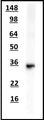
Our Anti-TREM2 chicken polyclonal primary antibody from Aves Labs is produced in-house. It detects human, mouse, and rat TREM2, and is affinity purified. Works in ICC, WB.

Immunofluorescence of TREM2-FLAG transfected COS-7 cells using chicken α-TREM2 (green) and mouse α-flag tag (red). Yellow/orange staining shows 100% correspondence between the two antibodies for recognition of transfected cells. Blue staining is DAPI and stains nuclei of both transfected and untransfected cells.
Click on image to zoom
SKU: TREM2-0100
Ships: 1-2 business days
Product Details
TREM2
Triggering receptor expressed on myeloid cells 2, TREM2, is a type I transmembrane innate immune receptor predominantly expressed by microglia in the central nervous system and is genetically linked to the risk for Alzheimer’s disease (Schmid, C.D., et al., 2002). TREM2 has been shown to be a specific marker for alternatively activated microglia known as M2 cells (Cherry, J.D. et al., 2014). TREM2 binds to its adaptor, DNAX-activating protein (DAP12) on the surface of microglia to enact innate immune responses and downstream cellular responses or signaling pathways (Jay,T.R, et al., 2017). TREM2 has important roles in microglial phagocytosis of apoptotic neurons, damaged myelin, and amyloid plaques (Gratuze, M., et al., 2018). In early brain development, TREM2 is essential for synaptic pruning (Filipello, F. et al., 2018).
Affinity purified
0.2 mg/mL
Polyclonal
IgY
ICC, WB
Chicken
TREM2
36 kDa
Purified recombinant extracellular domain of human TREM2 (Uniprot Q9NZC2) expressed in E.Coli
Human
Human, Mouse, Rat
AB_2910558
Store at 4°C in the dark. Under these conditions, the antibodies should have a shelf life of at least twelve months, provided they remain sterile. For longer term storage, aliquot and freeze to avoid freeze-thaw of the antibody.
Liquid
Eggs from hens hyperimmunized with target were used to prepare an IgY fraction which was then subjected to antigen-specific affinity purification
Phosphate-buffered (10 mM) isotonic (0.9%, w/v) saline (“PBS," pH 7.2) with sodium azide (0.02%, w/v) added as a preservative.
WB: 1:500-1:1000
ICC: 1:100-1:500
ICC: 1:100-1:500
Each new lot of this antibody is tested to confirm that it recognizes a single immunoreactive band of expected molecular weight when used to probe brain lysate.
These antibodies are to be used as research laboratory reagents and are not for use as diagnostic or therapeutic reagents in humans.
United States
12 months from receipt of product
TREM-2; Triggering receptor expressed on myeloid cells 2; Trem2b; Trem2c; triggering receptor expressed on monocytes 2; triggering receptor expressed on myeloid cells 2a
Q9NZC2
UniProt Summary: Forms a receptor signaling complex with TYROBP which mediates signaling and cell activation following ligand binding. Acts as a receptor for amyloid-beta protein 42, a cleavage product of the amyloid-beta precursor protein APP, and mediates its uptake and degradation by microglia. Binding to amyloid-beta 42 mediates microglial activation, proliferation, migration, apoptosis and expression of pro-inflammatory cytokines, such as IL6R and CCL3, and the anti-inflammatory cytokine ARG1. Acts as a receptor for lipoprotein particles such as LDL, VLDL, and HDL and for apolipoproteins such as APOA1, APOA2, APOB, APOE, APOE2, APOE3, APOE4, and CLU and enhances their uptake in microglia. Binds phospholipids (preferably anionic lipids) such as phosphatidylserine, phosphatidylethanolamine, phosphatidylglycerol and sphingomyelin. Regulates microglial proliferation by acting as an upstream regulator of the Wnt/beta-catenin signaling cascade. Required for microglial phagocytosis of apoptotic neurons. Also required for microglial activation and phagocytosis of myelin debris after neuronal injury and of neuronal synapses during synapse elimination in the developing brain. Regulates microglial chemotaxis and process outgrowth, and also the microglial response to oxidative stress and lipopolysaccharide. It suppresses PI3K and NF-kappa-B signaling in response to lipopolysaccharide; thus promoting phagocytosis, suppressing pro-inflammatory cytokine and nitric oxide production, inhibiting apoptosis and increasing expression of IL10 and TGFB. During oxidative stress, it promotes anti-apoptotic NF-kappa-B signaling and ERK signaling. Plays a role in microglial MTOR activation and metabolism. Regulates age-related changes in microglial numbers. Triggers activation of the immune responses in macrophages and dendritic cells. Mediates cytokine-induced formation of multinucleated giant cells which are formed by the fusion of macrophages. In dendritic cells, receptor of SEMA6D with PLEXNA1 as coreceptor and mediates up-regulation of chemokine receptor CCR7 and dendritic cell maturation and survival. Involved in the positive regulation of osteoclast differentiation.
54209
Ice packs