Anti-Polo-Like Kinase Kinase (Ser482,486,490) Antibody
Our Anti-Polo-Like Kinase Kinase (Ser482,486,490) rabbit polyclonal phosphospecific primary antibody from PhosphoSolutions is produced in-house. It detects rat and Xenopus Polo-Like Kinase Kinase (Ser482,486,490) and is antigen affinity purified from pooled serum. It is great for use in WB.
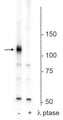
Western blot of rat hippocampal membrane lysate showing specific immunolabeling of the ~120 kDa Polo-Like Kinase Kinase phosphorylated at Ser482,486,490 in the first lane (-). Phosphospecificity is shown in the second lane (+) where the immunolabeling is completely eliminated by blot treatment with lambda phosphatase (λ-Ptase, 1200 units overnight).
Click on image to zoom
SKU: p200-48260
Ships: 1-2 business days
Product Details
Polo-Like Kinase Kinase (Ser482,486,490)
Considerable evidence indicates that a polo-like kinase (PLK) plays an important role in cell cycle regulation. PLK is also required for bipolar spindle formation, activation of the anaphase-promoting complex/cyclosome, and cytokinesis. Recent work led to the identification of a PLKK that is thought to be responsible for activation of PLK. Recent work (Erikson, et al., 2004) has shown that PLKK is in turn activated by phosphorylation at three sites (Ser-482, Ser-486 and Ser-490). Thus activation of PLK is thought to involve a kinase cascade involving the phosphorylation of Ser-482,486,490 in PLKK.
Antigen Affinity Purified from Pooled Serum
Polyclonal
IgG
ELISA, WB
Rabbit
PLKK1
120 kDa
Synthetic phospho-peptide corresponding to amino acid residues surrounding Ser482/486/490 of Xenopus polo-like kinase kinase (PLKK), conjugated to keyhole limpet hemocyanin (KLH).
Xenopus
Xenopus
Human, Mouse, Zebrafish
AB_2492210
Storage at -20°C is recommended, as aliquots may be taken without freeze/thawing due to presence of 50% glycerol. Stable for at least 1 year at -20°C.
Liquid
Prepared from rabbit serum by affinity purification via sequential chromatography on phospho- and dephosphopeptide affinity columns.
10 mM HEPES (pH 7.5), 150 mM NaCl, 100 µg per ml BSA and 50% glycerol.
WB: 1:1000
WB Brain: 1:1000
WB Brain: 1:1000
Unconjugated
Specific for endogenous levels of the ~120k PLKK protein phosphorylated at Ser482,486,490.
Phosphorylated
Ser482,486,490
Western blots performed on each lot.
For research use only. Not intended for therapeutic or diagnostic use. Use of all products is subject to our terms and conditions, which can be viewed on our website.
After date of receipt, stable for at least 1 year at -20°C.
Polo like kinase kinase 1; Serine/threonine kinase 10; stk10 a; xPlkk1
B7ZR30
UniProt Summary: Serine/threonine-protein kinase that performs several important functions throughout M phase of the cell cycle, including the regulation of centrosome maturation and spindle assembly, the removal of cohesins from chromosome arms, the inactivation of anaphase-promoting complex/cyclosome (APC/C) inhibitors, and the regulation of mitotic exit and cytokinesis (PubMed:11202906, PubMed:12207013, PubMed:12447691, PubMed:12524548, PubMed:12738781, PubMed:12852856, PubMed:12939256, PubMed:14532005, PubMed:14734534, PubMed:15070733, PubMed:15148369, PubMed:15469984, PubMed:16198290, PubMed:16247472, PubMed:16980960, PubMed:17081991, PubMed:17351640, PubMed:17376779, PubMed:17617734, PubMed:18174154, PubMed:18331714, PubMed:18418051, PubMed:18477460, PubMed:18521620, PubMed:18615013, PubMed:19160488, PubMed:19351716, PubMed:19468300, PubMed:19468302, PubMed:19473992, PubMed:19509060, PubMed:19597481, PubMed:23455478, PubMed:23509069, PubMed:28512243, PubMed:8991084). Polo-like kinase proteins act by binding and phosphorylating proteins that are already phosphorylated on a specific motif recognized by the POLO box domains (PubMed:11202906, PubMed:12207013, PubMed:12447691, PubMed:12524548, PubMed:12738781, PubMed:12852856, PubMed:12939256, PubMed:14532005, PubMed:14734534, PubMed:15070733, PubMed:15148369, PubMed:15469984, PubMed:16198290, PubMed:16247472, PubMed:16980960, PubMed:17081991, PubMed:17351640, PubMed:17376779, PubMed:17617734, PubMed:18174154, PubMed:18331714, PubMed:18418051, PubMed:18477460, PubMed:18521620, PubMed:18615013, PubMed:19160488, PubMed:19351716, PubMed:19468300, PubMed:19468302, PubMed:19473992, PubMed:19509060, PubMed:19597481, PubMed:23455478, PubMed:23509069, PubMed:28512243, PubMed:8991084). Phosphorylates BORA, BUB1B/BUBR1, CCNB1, CDC25C, CEP55, ECT2, ERCC6L, FBXO5/EMI1, FOXM1, KIF20A/MKLP2, CENPU, NEDD1, NINL, NPM1, NUDC, PKMYT1/MYT1, KIZ, MRE11, PPP1R12A/MYPT1, POLQ, PRC1, RACGAP1/CYK4, RAD51, RHNO1, SGO1, STAG2/SA2, TEX14, TOPORS, p73/TP73, TPT1, WEE1 and HNRNPU (PubMed:11202906, PubMed:12207013, PubMed:12447691, PubMed:12524548, PubMed:12738781, PubMed:12852856, PubMed:12939256, PubMed:14532005, PubMed:14734534, PubMed:15070733, PubMed:15148369, PubMed:15469984, PubMed:16198290, PubMed:16247472, PubMed:16980960, PubMed:17081991, PubMed:17218258, PubMed:17351640, PubMed:17376779, PubMed:17617734, PubMed:18174154, PubMed:18331714, PubMed:18418051, PubMed:18477460, PubMed:18521620, PubMed:18615013, PubMed:19160488, PubMed:19351716, PubMed:19468300, PubMed:19468302, PubMed:19473992, PubMed:19509060, PubMed:19597481, PubMed:22325354, PubMed:23455478, PubMed:23509069, PubMed:25986610, PubMed:26811421, PubMed:28512243, PubMed:37440612, PubMed:37674080, PubMed:8991084). Plays a key role in centrosome functions and the assembly of bipolar spindles by phosphorylating KIZ, NEDD1 and NINL (PubMed:16980960, PubMed:19509060). NEDD1 phosphorylation promotes subsequent targeting of the gamma-tubulin ring complex (gTuRC) to the centrosome, an important step for spindle formation (PubMed:19509060). Phosphorylation of NINL component of the centrosome leads to NINL dissociation from other centrosomal proteins (PubMed:12852856). Involved in mitosis exit and cytokinesis by phosphorylating CEP55, ECT2, KIF20A/MKLP2, CENPU, PRC1 and RACGAP1 (PubMed:12939256, PubMed:16247472, PubMed:17351640, PubMed:19468300, PubMed:19468302). Recruited at the central spindle by phosphorylating and docking PRC1 and KIF20A/MKLP2; creates its own docking sites on PRC1 and KIF20A/MKLP2 by mediating phosphorylation of sites subsequently recognized by the POLO box domains (PubMed:12939256, PubMed:17351640). Phosphorylates RACGAP1, thereby creating a docking site for the Rho GTP exchange factor ECT2 that is essential for the cleavage furrow formation (PubMed:19468300, PubMed:19468302). Promotes the central spindle recruitment of ECT2 (PubMed:16247472). Plays a central role in G2/M transition of mitotic cell cycle by phosphorylating CCNB1, CDC25C, FOXM1, CENPU, PKMYT1/MYT1, PPP1R12A/MYPT1 and WEE1 (PubMed:11202906, PubMed:12447691, PubMed:12524548, PubMed:19160488). Part of a regulatory circuit that promotes the activation of CDK1 by phosphorylating the positive regulator CDC25C and inhibiting the negative regulators WEE1 and PKMYT1/MYT1 (PubMed:11202906). Also acts by mediating phosphorylation of cyclin-B1 (CCNB1) on centrosomes in prophase (PubMed:12447691, PubMed:12524548). Phosphorylates FOXM1, a key mitotic transcription regulator, leading to enhance FOXM1 transcriptional activity (PubMed:19160488). Involved in kinetochore functions and sister chromatid cohesion by phosphorylating BUB1B/BUBR1, FBXO5/EMI1 and STAG2/SA2 (PubMed:15148369, PubMed:15469984, PubMed:17376779, PubMed:18331714). PLK1 is high on non-attached kinetochores suggesting a role of PLK1 in kinetochore attachment or in spindle assembly checkpoint (SAC) regulation (PubMed:17617734). Required for kinetochore localization of BUB1B (PubMed:17376779). Regulates the dissociation of cohesin from chromosomes by phosphorylating cohesin subunits such as STAG2/SA2 (By similarity). Phosphorylates SGO1: required for spindle pole localization of isoform 3 of SGO1 and plays a role in regulating its centriole cohesion function (PubMed:18331714). Mediates phosphorylation of FBXO5/EMI1, a negative regulator of the APC/C complex during prophase, leading to FBXO5/EMI1 ubiquitination and degradation by the proteasome (PubMed:15148369, PubMed:15469984). Acts as a negative regulator of p53 family members: phosphorylates TOPORS, leading to inhibit the sumoylation of p53/TP53 and simultaneously enhance the ubiquitination and subsequent degradation of p53/TP53 (PubMed:19473992). Phosphorylates the transactivation domain of the transcription factor p73/TP73, leading to inhibit p73/TP73-mediated transcriptional activation and pro-apoptotic functions. Phosphorylates BORA, and thereby promotes the degradation of BORA (PubMed:18521620). Contributes to the regulation of AURKA function (PubMed:18615013, PubMed:18662541). Also required for recovery after DNA damage checkpoint and entry into mitosis (PubMed:18615013, PubMed:18662541). Phosphorylates MISP, leading to stabilization of cortical and astral microtubule attachments required for proper spindle positioning (PubMed:23509069). Together with MEIKIN, acts as a regulator of kinetochore function during meiosis I: required both for mono-orientation of kinetochores on sister chromosomes and protection of centromeric cohesin from separase-mediated cleavage (By similarity). Phosphorylates CEP68 and is required for its degradation (PubMed:25503564). Regulates nuclear envelope breakdown during prophase by phosphorylating DCTN1 resulting in its localization in the nuclear envelope (PubMed:20679239). Phosphorylates the heat shock transcription factor HSF1, promoting HSF1 nuclear translocation upon heat shock (PubMed:15661742). Phosphorylates HSF1 also in the early mitotic period; this phosphorylation regulates HSF1 localization to the spindle pole, the recruitment of the SCF(BTRC) ubiquitin ligase complex induicing HSF1 degradation, and hence mitotic progression (PubMed:18794143). Regulates mitotic progression by phosphorylating RIOK2 (PubMed:21880710). Through the phosphorylation of DZIP1 regulates the localization during mitosis of the BBSome, a ciliary protein complex involved in cilium biogenesis (PubMed:27979967). Regulates DNA repair during mitosis by mediating phosphorylation of POLQ and RHNO1, thereby promoting POLQ recruitment to DNA damage sites (PubMed:37440612, PubMed:37674080). Phosphorylates ATXN10 which may play a role in the regulation of cytokinesis and may stimulate the proteasome-mediated degradation of ATXN10 (PubMed:21857149). {ECO:0000250|UniProtKB:P70032, ECO:0000250|UniProtKB:Q5F2C3, ECO:0000269|PubMed:11202906, ECO:0000269|PubMed:12207013, ECO:0000269|PubMed:12447691, ECO:0000269|PubMed:12524548, ECO:0000269|PubMed:12738781, ECO:0000269|PubMed:12852856, ECO:0000269|PubMed:12939256, ECO:0000269|PubMed:14532005, ECO:0000269|PubMed:14734534, ECO:0000269|PubMed:15070733, ECO:0000269|PubMed:15148369, ECO:0000269|PubMed:15469984, ECO:0000269|PubMed:15661742, ECO:0000269|PubMed:16198290, ECO:0000269|PubMed:16247472, ECO:0000269|PubMed:16980960, ECO:0000269|PubMed:17081991, ECO:0000269|PubMed:17218258, ECO:0000269|PubMed:17351640, ECO:0000269|PubMed:17376779, ECO:0000269|PubMed:17617734, ECO:0000269|PubMed:18174154, ECO:0000269|PubMed:18331714, ECO:0000269|PubMed:18418051, ECO:0000269|PubMed:18477460, ECO:0000269|PubMed:18521620, ECO:0000269|PubMed:18615013, ECO:0000269|PubMed:18662541, ECO:0000269|PubMed:18794143, ECO:0000269|PubMed:19160488, ECO:0000269|PubMed:19351716, ECO:0000269|PubMed:19468300, ECO:0000269|PubMed:19468302, ECO:0000269|PubMed:19473992, ECO:0000269|PubMed:19509060, ECO:0000269|PubMed:19597481, ECO:0000269|PubMed:20679239, ECO:0000269|PubMed:21857149, ECO:0000269|PubMed:21880710, ECO:0000269|PubMed:22325354, ECO:0000269|PubMed:23455478, ECO:0000269|PubMed:23509069, ECO:0000269|PubMed:25503564, ECO:0000269|PubMed:25986610, ECO:0000269|PubMed:26811421, ECO:0000269|PubMed:27979967, ECO:0000269|PubMed:37440612, ECO:0000269|PubMed:37674080, ECO:0000269|PubMed:8991084}.

373731
Blue Ice
- Western Blot Protocol: Download
General References
- Erikson, E., Haystead, T.A., Qian, Y.W. and Maller, J.L., 2004. A feedback loop in the polo-like kinase activation pathway. Journal of Biological Chemistry, 279(31), pp.32219-32224. PMID: 15166215
- Kumagai, A. and Dunphy, W.G., 1996. Purification and molecular cloning of Plx1, a Cdc25-regulatory kinase from Xenopus egg extracts. Science, 273(5280), pp.1377-1380. PMID: 8703070
- Liu, J., Lewellyn, A.L., Chen, L.G. and Maller, J.L., 2004. The polo box is required for multiple functions of Plx1 in mitosis. Journal of Biological Chemistry, 279(20), pp.21367-21373. PMID: 15016807
- van Vugt, M.A., van de Weerdt, B.C., Vader, G., Janssen, H., Calafat, J., Klompmaker, R., Wolthuis, R.M. and Medema, R.H., 2004. Polo-like kinase-1 is required for bipolar spindle formation but is dispensable for anaphase promoting complex/Cdc20 activation and initiation of cytokinesis. Journal of biological chemistry, 279(35), pp.36841-36854. PMID: 15210710