Anti-Lamin A/C Antibody
Our Anti-Lamin A/C chicken polyclonal primary antibody detects human Lamin A/C, and is affinity-purified. It is validated for use in ICC, IHC, WB.
SKU: C-1698-100
Ships: 5-7 business days
Product Details
Lamin A/C
The Lamin proteins are members of the intermediate filament protein family but are located inside the nucleus rather than in the cytoplasm (1). The lamins function as skeletal components tightly associated with the inner nuclear membrane. Originally the proteins of the nuclear cytoskeleton were named Lamin A, B and C, from top to bottom as visualized on SDS-PAGE gels. Subsequently it was found that Lamins A and C were coded for by a single gene (2), while the Lamin B band may contain two proteins encoded by two genes now called Lamin B1 and Lamin B2. Lamin A has a mass of about 74 kDa while Lamin C is 65 kDa. The Lamin A protein includes 98 amino acids missing from Lamin C, while Lamin C has a C-terminal 6 amino acid peptide not present in Lamin A. Apart from these regions Lamin A and C are identical so that antibodies raised against either protein are likely to cross react with the other, as is the case with this monoclonal. Lamin polymerization and depolymerization is regulated by phosphorylation by cyclin dependent protein kinase 1 (CDK1), the key component of "maturation promoting factor", the central regulator of cell division. Activity of this kinase increases during cell division and is responsible for the breakdown of the nuclear lamina. Mutations in the LMNA gene are associated with several serious human diseases, including Emery-Dreifuss muscular dystrophy, familial partial lipodystrophy, limb girdle muscular dystrophy, dilated cardiomyopathy, Charcot-Marie-Tooth disease type 2B1, and Hutchinson-Gilford progeria syndrome. This family of diseases belong to a larger group which are often referred to as Laminopathies, though some laminopathies are associated in defects in Lamin B1, B2 or one or other of the numerous nuclear lamina binding proteins. A truncated version of lamin A, commonly known as progerin, causes Hutchinson-Gilford progeria syndrome, a form of premature aging (3).
Affinity-purified
Polyclonal
IgY
ICC, IHC, WB
Chicken
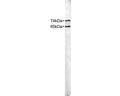
74 kDa and 65 kDa
Full length recombinant human Lamin C
Human
Human
Spin vial briefly before opening. Reconstitute with 100 µL sterile-filtered, ultrapure water. Centrifuge to remove any insoluble material. After reconstitution of lyophilized antibody, aliquot and store at -20°C for a higher stability. Avoid freeze-thaw cycles.
Lyophilized
Lyophilized IgY preparation, with sodium azide.
WB: 1:1000-1:2000
ICC: 1:500-1:1000
ICC: 1:500-1:1000
Unconjugated
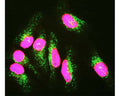
Lamin A and Lamin C. The antibody reacts with a 74 kDa and 65 kDa band by Western blot on HeLa cell extract. It has also been used successfully for immunocytochemistry on HeLa cell cultures.
For research use only.
United States
12 months after date of receipt (unopened vial).
70 kDa lamin; 70 kDa lamin; Cardiomyopathy dilated 1A (autosomal dominant; Renal carcinoma antigen NY-REN-32; CDCD1; LMNA; CDDC; LMN1; CMD1A; CMT2B1; EMD2; FPL; FPLD; FPLD2; HGPS; IDC; Lamin A; Lamin A/C; Lamin A/C like 1; Lamin; Lamin C; Lamin-A/C; LDP1; LFP; LGMD1B; Limb girdle muscular dystrophy 1B (autosomal dominant; LMN 1; LMN A; LMN C; LMN1; LMNA; LMNA_HUMAN; LMNC; LMNL1; Prelamin A/C; PRO1; Renal carcinoma antigen NY REN 32; Renal carcinoma antigen NY-REN-32; Renal carcinoma antigen NYREN32
P02545
UniProt Summary: [Lamin-A/C]: Lamins are intermediate filament proteins that assemble into a filamentous meshwork, and which constitute the major components of the nuclear lamina, a fibrous layer on the nucleoplasmic side of the inner nuclear membrane. Lamins provide a framework for the nuclear envelope, bridging the nuclear envelope and chromatin, thereby playing an important role in nuclear assembly, chromatin organization, nuclear membrane and telomere dynamics. Lamin A and C also regulate matrix stiffness by conferring nuclear mechanical properties. The structural integrity of the lamina is strictly controlled by the cell cycle, as seen by the disintegration and formation of the nuclear envelope in prophase and telophase, respectively. Lamin A and C are present in equal amounts in the lamina of mammals. Also involved in DNA repair: recruited by DNA repair proteins XRCC4 and IFFO1 to the DNA double-strand breaks (DSBs) to prevent chromosome translocation by immobilizing broken DNA ends. Required for normal development of peripheral nervous system and skeletal muscle and for muscle satellite cell proliferation. Required for osteoblastogenesis and bone formation. Also prevents fat infiltration of muscle and bone marrow, helping to maintain the volume and strength of skeletal muscle and bone. Required for cardiac homeostasis.
4000
25°C (ambient)