
Anti-Delta Opioid Receptor Antibody
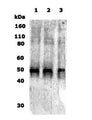
Our Delta Opioid Receptor rabbit polyclonal primary antibody from PhosphoSolutions is produced in-house. It detects human, mouse, and rat Delta Opioid Receptor and is antigen affinity purified. It is great for use in WB.
SKU: 24538
Ships: 1-2 business days
Product Details
Delta Opioid Receptor
G protein-coupled receptors (GPCRs) are the largest family of membrane receptors that activate intracellular signaling cascades and undergo endocytosis, recycling, or degradation upon stimulation. The (mu) m-, delta (d) and kappa (k) opioid receptors are GPCRs of the nervous system, which control pain, stress, and addictive behaviors. The delta opioid receptor (DOR-1) is the stereoselective receptor for enkephalins and inhibits neurotransmitter release by reducing calcium ion currents and increasing potassium ion conductance.
Antigen Affinity Purified
Polyclonal
IgG
ELISA, WB
Rabbit
OPRD1
Synthetic peptide corresponding to amino acids from the N-terminal region of human DOR-1 protein
Human
Human, Mouse, Rat
Recommended that the undiluted antibody be aliquoted into smaller working volumes (10-30 uL/vial depending on usage) upon arrival and stored long term at -20° C or -80° C, while keeping a working aliquot stored at 4° C for short term. Avoid freeze/thaw cycles. Stable for at least 1 year.
Liquid
PBS + 0.02% NaN3
WB: 1:500-1:1000
WB Brain: 1:500-1:1000
Reacts with N-terminal region of human, mouse and rat DOR-1 protein.
Western blots performed on each lot.
For research use only. Not intended for therapeutic or diagnostic use. Use of all products is subject to our terms and conditions, which can be viewed on our website.
United States
After date of receipt, stable for at least 1 year at -20°C.
OPRD; OPRD1; D-OR-1; DOR-1; delta opioid receptor 1; Delta-type opioid receptor; DOR1,
P41143
UniProt Summary: G-protein coupled receptor that functions as a receptor for endogenous enkephalins and for a subset of other opioids. Ligand binding causes a conformation change that triggers signaling via guanine nucleotide-binding proteins (G proteins) and modulates the activity of down-stream effectors, such as adenylate cyclase. Signaling leads to the inhibition of adenylate cyclase activity. Inhibits neurotransmitter release by reducing calcium ion currents and increasing potassium ion conductance. Plays a role in the perception of pain and in opiate-mediated analgesia. Plays a role in developing analgesic tolerance to morphine.
4985
Blue Ice

