
Anti-CD71 Antibody (DF1513)
Our Anti-CD71 mouse monoclonal primary antibody from PhosphoSolutions is produced in-house. It detects CD71 and is Protein G purified. It is great for use in WB, IHC.
SKU: 307-CD71
Ships: 1-2 business days
Product Details
CD71
CD71, also known as the transferrin receptor (TfR1), is a transmembrane glycoprotein whose primary function is to mediate cellular uptake of iron from a plasma glycoprotein, transferrin. CD71 is a widely used marker for cell activation or proliferation of lymphocytes as transferrin receptor expression is undetectable in resting T and B lymphocytes, but increases significantly upon lymphocyte antigen activation (Galbraith, R.M., et al 1981). Rapidly proliferating cells and energy-requiring cells, like cancer cells, osteoclasts (Roodman, G.D., 2009), and activated lymphocytes (Wieland, E., et al, 2016) express high levels of CD71 due to increased iron demand. TfR1 is seen as an efficient drug delivery system for cancer patients as it can mediate extracellular transferrin conjugated molecules for treatment (Luria-Perez, R., et al, 2016).
Protein G purified
Monoclonal
DF1513
IgG1
ELISA, IHC, WB
Mouse
TFRC
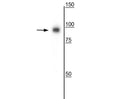
98 kDa
Preparation of KG1 cells
Human
Human
AB_2890166
Recommended that the undiluted antibody be aliquoted into smaller working volumes (10-30 uL/vial depending on usage) upon arrival and stored long term at -20° C or -80° C, while keeping a working aliquot stored at 4° C for short term. Avoid freeze/thaw cycles. Stable for at least 1 year.
Liquid
Protein G purified culture supernatant.
PBS
WB: 1:1000
IHC: 1:100
IHC: 1:100
Unconjugated
Specific for endogenous levels of the ~98 kDa CD71 protein.
For research use only. Not intended for therapeutic or diagnostic use. Use of all products is subject to our terms and conditions, which can be viewed on our website.
After date of receipt, stable for at least 1 year at -20°C.
CD 71; CD71; p90 CD71; CD71 antigen; IMD46; OTTHUMP00000208523; OTTHUMP00000208524; OTTHUMP00000208525; p90; sTfR; T9; TFR 1; TfR; TfR1; TFR1_HUMAN; TFRC; TR; Transferrin receptor (p90 CD71; Transferrin receptor protein 1; serum form; Trfr; Transferrin receptor
P02786
UniProt Summary: Cellular uptake of iron occurs via receptor-mediated endocytosis of ligand-occupied transferrin receptor into specialized endosomes (PubMed:26214738). Endosomal acidification leads to iron release. The apotransferrin-receptor complex is then recycled to the cell surface with a return to neutral pH and the concomitant loss of affinity of apotransferrin for its receptor. Transferrin receptor is necessary for development of erythrocytes and the nervous system (By similarity). A second ligand, the hereditary hemochromatosis protein HFE, competes for binding with transferrin for an overlapping C-terminal binding site. Positively regulates T and B cell proliferation through iron uptake (PubMed:26642240). Acts as a lipid sensor that regulates mitochondrial fusion by regulating activation of the JNK pathway (PubMed:26214738). When dietary levels of stearate (C18:0) are low, promotes activation of the JNK pathway, resulting in HUWE1-mediated ubiquitination and subsequent degradation of the mitofusin MFN2 and inhibition of mitochondrial fusion (PubMed:26214738). When dietary levels of stearate (C18:0) are high, TFRC stearoylation inhibits activation of the JNK pathway and thus degradation of the mitofusin MFN2 (PubMed:26214738). Mediates uptake of NICOL1 into fibroblasts where it may regulate extracellular matrix production (By similarity). {ECO:0000250|UniProtKB:Q62351, ECO:0000269|PubMed:26214738, ECO:0000269|PubMed:26642240, ECO:0000269|PubMed:3568132}.; (Microbial infection) Acts as a receptor for new-world arenaviruses: Guanarito, Junin and Machupo virus. {ECO:0000269|PubMed:17287727, ECO:0000269|PubMed:18268337}.; (Microbial infection) Acts as a host entry factor for rabies virus that hijacks the endocytosis of TFRC to enter cells. {ECO:0000269|PubMed:36779762, ECO:0000269|PubMed:36779763}.; (Microbial infection) Acts as a host entry factor for SARS-CoV, MERS-CoV and SARS-CoV-2 viruses that hijack the endocytosis of TFRC to enter cells. {ECO:0000269|PubMed:36779762}.; (Microbial infection) Acts as a receptor for Plasmodium vivax. {ECO:0000269|PubMed:29302006}.
7037
Blue Ice
- Western Blot Protocol: Download

