Anti-Adaptor Protein, APPL1 Antibody
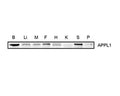
Our Anti-Adaptor protein, phosphotyrosine interacting with PH domain and leucine zipper 1 (APPL1) rabbit polyclonal primary antibody detects human and mouse Adaptor protein, phosphotyrosine interacting with PH domain and leucine zipper 1 (APPL1), and is whole serum. It is validated for use in ICC, WB.
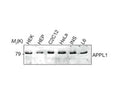
Western Blot showing APPL1 expression in mammalian cells. Lysates from HEK293 (HEK), mouse hepatocytes (HEP), differentiated C2C12 myotubes (C2C12), HeLa, INS1 and L6 cells were separated by SDS-PAGE and examined by western blot using Rabbit polyclonal antibody to human APPL1, catalog number R-1331-100. Image courtesy of Mao X. et al (2006) Nat Cell Biol.
Click on image to zoom
SKU: R-1331-100
Ships: 1-2 business days
Product Details
Adaptor protein, phosphotyrosine interacting with PH domain and leucine zipper 1 (APPL1)
APPL1 (adaptor protein containing PH domain, PTB domain and leucine zipper motif 1) mediates adiponectin signaling in various types of cells. APPL1 is also thought to have a role in insulin signaling.
Whole serum
Polyclonal
Mixed
ICC, WB
Rabbit
The C-terminus of Human APPL1 protein (amino acids: 455-709) conjugated to GST.
Human
Human, Mouse
Spin vial briefly before opening. Reconstitute in 100 µL sterile-filtered, ultrapure water. Centrifuge to remove any insoluble material. At least 12 months after purchase at 2-8°C (lyophilized formulations). After reconstitution, aliquot and store at -20°C for a higher stability. Avoid freeze-thaw cycles.
Lyophilized
WB: 1:1000
IP: 3 µg/reaction
IP: 3 µg/reaction
Unconjugated
This antiserum is known to recognize both mouse and human APPL1.
For research use only.
United States
12 months after date of receipt (unopened vial).
APPL; DCC-interacting protein 13-alpha; MODY14; Dip13-alpha; Adapter protein containing PH domain; AKT2 interactor; PTB domain and leucine zipper motif 1; APPL1; signaling adaptor protein DIP13alpha; DIP13A; KIAA1428
Q9UKG1
UniProt Summary: Multifunctional adapter protein that binds to various membrane receptors, nuclear factors and signaling proteins to regulate many processes, such as cell proliferation, immune response, endosomal trafficking and cell metabolism. Regulates signaling pathway leading to cell proliferation through interaction with RAB5A and subunits of the NuRD/MeCP1 complex. Functions as a positive regulator of innate immune response via activation of AKT1 signaling pathway by forming a complex with APPL1 and PIK3R1. Inhibits Fc-gamma receptor-mediated phagocytosis through PI3K/Akt signaling in macrophages. Regulates TLR4 signaling in activated macrophages. Involved in trafficking of the TGFBR1 from the endosomes to the nucleus via microtubules in a TRAF6-dependent manner. Plays a role in cell metabolism by regulating adiponecting and insulin signaling pathways. Required for fibroblast migration through HGF cell signaling. Positive regulator of beta-catenin/TCF-dependent transcription through direct interaction with RUVBL2/reptin resulting in the relief of RUVBL2-mediated repression of beta-catenin/TCF target genes by modulating the interactions within the beta-catenin-reptin-HDAC complex.
26060
25°C (ambient)