Anti-CD155/PVR (Extracellular region) Antibody (M048)
Our CD155/PVR (Extracellular region) Antibody mouse monoclonal primary antibody from PhosphoSolutions is produced in-house. It detects human CD155/PVR (Extracellular region) Antibody and is Protein G purified. It is great for use in WB, IP, ICC.
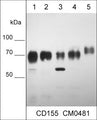
Western blot of human A549 lung carcinoma (lane 1), NCI-H446 small cell lung carcinoma (lane 2), NCI-H1299 lung carcinoma (lane 3), MDA-MB-231 breast carcinoma (lane 4), and A431 epidermoid carcinoma (lane 5). The blot was probed with mouse monoclonal anti-CD155 (CM0481) at 1:500.
Click on image to zoom

SKU: CM0481
Ships: 1-2 business days
Product Details
CD155/PVR (Extracellular region) Antibody
CD155/Poliovirus receptor (PVR)/nectin-like 5 (Necl-5) is a transmembrane glycoprotein with extracellular immunoglobulin like domains, and an intracellular immunoreceptor tyrosine-based inhibitor motif (ITIM). CD155 was originally described as a mediator of poliovirus attachment to cells, but has also been implicated in adherens junction formation. CD155 binds nectin-3, and interacts with integrin αvβ3 and PDGFR to regulate integrin clustering and focal contact formation at the leading edge of migrating cells. CD155 is also a ligand for immunoreceptors that regulate tumor surveillance. CD155 binds DNAX-associated molecule 1 (DNAX-1), an activating receptor on natural killer cells and cytotoxic T-cells. Alternatively, CD155 may bind TIGIT immunoreceptor inducing an immunosuppressive and non-cytotoxic profile. In cancers, CD155 expression has been associated with unfavorable prognosis in colon cancer, breast cancer, lung adenocarcinoma, pancreatic cancer, melanoma, and glioblastoma. Cancer therapies have targeted CD155 interactions with TIGIT, and have used CD155 as a point of entry for recombinant oncolytic polioviruses.
Protein G Purified
Monoclonal
M048
IgG1
ELISA, ICC, IP, WB
Mouse
CD155
75
Clone (M048) was generated from a recombinant protein that included the extracellular region of human CD155 protein.
Human
Human
Storage at -20°C is recommended, as aliquots may be taken without freeze/thawing due to presence of 50% glycerol. Stable for at least 1 year at -20°C.
Liquid
PBS + 1 mg/ml BSA, 0.05% NaN3 and 50% glycerol
WB: 1:1000
ICC: 1:100
IP: 1:100
ICC: 1:100
IP: 1:100
Unconjugated
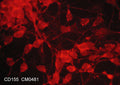
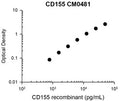
Clone M048 mouse monoclonal antibody detects a 75 kDa* protein on SDS-PAGE "Native" or denatured immunoblots of human A549, NCI-H466, NCI-H1299, MDA-MB-231 and A431 carcinomas. The antibody detects CD155 in the membranes and cytoplasm in NCI-H446 cells after immunocytochemical labeling. The antibody works for western blot, immunoprecipitation, immunocytochemistry, and ELISA capture.
Western blots performed on each lot.
For research use only. Not intended for therapeutic or diagnostic use. Use of all products is subject to our terms and conditions, which can be viewed on our website.
United States
After date of receipt, stable for at least 1 year at -20°C.
CD155; NECL-5; NECL5; PVS; TAGE4; poliovirus receptor; nectin-like protein 5; PVR
P15151
UniProt Summary: Mediates NK cell adhesion and triggers NK cell effector functions. Binds two different NK cell receptors: CD96 and CD226. These interactions accumulates at the cell-cell contact site, leading to the formation of a mature immunological synapse between NK cell and target cell. This may trigger adhesion and secretion of lytic granules and IFN-gamma and activate cytotoxicity of activated NK cells. May also promote NK cell-target cell modular exchange, and PVR transfer to the NK cell. This transfer is more important in some tumor cells expressing a lot of PVR, and may trigger fratricide NK cell activation, providing tumors with a mechanism of immunoevasion. Plays a role in mediating tumor cell invasion and migration.
5817
Blue Ice