Anti-TDP43 Antibody
Our Anti-TDP43 primary antibody from PhosphoSolutions is rabbit polyclonal. It detects human and rat TDP43 and is affinity purified. It is great for use in WB, IHC, ICC.
SKU: 2000-TDP
Ships: 1-2 business days
Product Details
TDP43
TDP43 (Tar DNA Binding 43, TARDBP) was originally identified as a protein which binds to the "transactivation response" (TAR) sequence found in the long terminal repeat of the HIV-1 virus genome (Ou et al.,1995). UV cross-linking of HeLa cell extract revealed a 43kDa protein which was cloned and sequenced and shown to contain two copies of the ~90 amino acid RRM domain. RRM is an acronym for RNA Recognition Motif, and this domain is found in many proteins which bind single stranded RNA and some which bind single stranded DNA. Northern blots showed that the protein is ubiquitous in tissue expression. Much interest has been focused on TDP43 recently due to its association with the inclusions seen in frontotemporal lobar degeneration and Amyotrophic Lateral Sclerosis (Neumann et al., 2006). The protein is present in these inclusions in partially degraded, hyperphosphorylated and ubiquitinated forms.
Affinity Purified
Polyclonal
IgG
ELISA, IHC, WB
Rabbit
TARDBP
43 kDa
Synthetic peptide C-terminal to the caspase-cleavage site (between D219 and V220) of human TDP-43.
Human
Human, Rat
AB_2492258
Recommended that the undiluted antibody be aliquoted into smaller working volumes (10-30 uL/vial depending on usage) upon arrival and stored long term at -20° C or -80° C, while keeping a working aliquot stored at 4° C for short term. Avoid freeze/thaw cycles. Stable for at least 1 year.
Liquid
Prepared from pooled rabbit serum by affinity purification using a column to which the peptide immunogen was coupled.
PBS + 30% glycerol
WB: 1:1000
WB Brain: 1:1000
IHC: 1:250-1:1000
ICC: 1:1000
WB Brain: 1:1000
IHC: 1:250-1:1000
ICC: 1:1000
Unconjugated
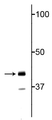
Specific for endogenous levels of the ~43 kDa TDP-43 protein in Western blots of rat brain lysate. Expected molecular weight is dependent upon the TDP-43 species present in sample (full-length vs. truncated TDP-43). Under non-denaturing conditions (for example, by IHC), this antibody detects TDP-43 inclusions in human brain tissue with TDP-43 proteinopathy, but does not detect full-length nuclear TDP-43. Under denaturing conditions (for example, by Western Blot analysis) this antibody detects the C-terminus of full-length and truncated human TDP-43.
Western blots performed on each lot.
For research use only. Not intended for therapeutic or diagnostic use. Use of all products is subject to our terms and conditions, which can be viewed on our website.
After date of receipt, stable for at least 1 year at -20°C.
ALS10; OTTHUMP00000002171; OTTHUMP00000002172; OTTHUMP00000002173; TADBP_HUMAN; TAR DNA binding protein 43; TAR DNA binding protein; TAR DNA-binding protein 43; TARDBP; TDP 43; TDP-43; TDP43
Q13148
UniProt Summary: RNA-binding protein that is involved in various steps of RNA biogenesis and processing (PubMed:23519609). Preferentially binds, via its two RNA recognition motifs RRM1 and RRM2, to GU-repeats on RNA molecules predominantly localized within long introns and in the 3'UTR of mRNAs (PubMed:23519609, PubMed:24240615, PubMed:24464995). In turn, regulates the splicing of many non-coding and protein-coding RNAs including proteins involved in neuronal survival, as well as mRNAs that encode proteins relevant for neurodegenerative diseases (PubMed:21358640, PubMed:29438978). Plays a role in maintaining mitochondrial homeostasis by regulating the processing of mitochondrial transcripts (PubMed:28794432). Also regulates mRNA stability by recruiting CNOT7/CAF1 deadenylase on mRNA 3'UTR leading to poly(A) tail deadenylation and thus shortening (PubMed:30520513). In response to oxidative insult, associates with stalled ribosomes localized to stress granules (SGs) and contributes to cell survival (PubMed:19765185, PubMed:23398327). Also participates in the normal skeletal muscle formation and regeneration, forming cytoplasmic myo-granules and binding mRNAs that encode sarcomeric proteins (PubMed:30464263). Plays a role in the maintenance of the circadian clock periodicity via stabilization of the CRY1 and CRY2 proteins in a FBXL3-dependent manner (PubMed:27123980). Negatively regulates the expression of CDK6 (PubMed:19760257). Regulates the expression of HDAC6, ATG7 and VCP in a PPIA/CYPA-dependent manner (PubMed:25678563). {ECO:0000269|PubMed:11285240, ECO:0000269|PubMed:17481916, ECO:0000269|PubMed:19760257, ECO:0000269|PubMed:19765185, ECO:0000269|PubMed:21358640, ECO:0000269|PubMed:23398327, ECO:0000269|PubMed:23519609, ECO:0000269|PubMed:24240615, ECO:0000269|PubMed:24464995, ECO:0000269|PubMed:25678563, ECO:0000269|PubMed:27123980, ECO:0000269|PubMed:28794432, ECO:0000269|PubMed:29438978, ECO:0000269|PubMed:30464263, ECO:0000269|PubMed:30520513}.

23435
Blue Ice