
Anti-Synphilin-1 (Sph1) Antibody
Our Anti-Synphilin-1 (Sph1) rabbit polyclonal primary antibody detects human and rat Synphilin-1 (Sph1), and is whole serum. It is validated for use in IHC-Frozen.
SKU: R-116-100
Ships: 1-2 business days
Product Details
Synphilin-1 (Sph1)
Synuclein alpha interacting protein (Synphilin-1) contains several protein-protein interaction domains and interacts with alpha synuclein in neurons. Mutations of SNCAIP have been linked to Parkinson disease. The amino acid sequence of synphilin-1 shares a high level of identity with its human counterpart, particularly in regions containing ankyrin-like motifs and the coiled-coil domain. Expression pattern of synphilin-1 in tissues is similar in both mouse and human. Synphilin-1 has an important role in the formation of aggregates and cytotoxicity in Parkinson disease and also Dorfin may be involved in the pathogenic process by ubiquitylation of synphilin-1.
Whole serum
Polyclonal
Mixed
IHC
Rabbit
A synthetic peptide (SLELNGEKDKDKGRTLQRT) as part of human synphilin-1a conjugated to KLH has been used as the immunogen.
Human
Human, Rat
Spin vial briefly before opening. Reconstitute in 100 µL sterile-filtered, ultrapure water. Centrifuge to remove any insoluble material. After reconstitution keep aliquots at -20°C for a higher stability, and at 2-8°C with an appropriate antibacterial agent. Glycerol (1:1) may be added for an additional stability. Avoid repetitive freeze/thaw cycles.
Lyophilized
IHC: 1:1000-1:2000
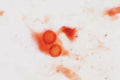
This antiserum will stain Lewy bodies in Dorsal raphe nucleus of Parkinson's diseased human brain.
Unconjugated
A high level of specificity has been shown for this antiserum by IHC on human brain. This antiserum is known to react with rat and human synphilin-1a.
For research use only.
United States
12 months after date of receipt (unopened vial).
SYPH1; Synphilin-1a protein; synphilin-1; synuclein alpha interacting protein; Synphilin 1; SNCAIP
Q6L986
UniProt Summary: Isoform 2 inhibits the ubiquitin ligase activity of SIAH1 and inhibits proteasomal degradation of target proteins. Isoform 2 inhibits autoubiquitination and proteasomal degradation of SIAH1, and thereby increases cellular levels of SIAH. Isoform 2 modulates SNCA monoubiquitination by SIAH1.
Miscellaneous
Constructs encoding portions of SNCA and SNCAIP co-transfected in mammalian cells promote cytosolic inclusions resembling the Lewy bodies of Parkinson disease. Coexpression of SNCA, SNCAIP, and PRKN result in the formation of Lewy body-like. ubiquitin-positive cytosolic inclusions. SNCAIP isoform 2 is particularly aggregation-prone. Familial mutations in PRKN disrupt the ubiquitination of SNCAIP and the formation of the ubiquitin-positive inclusions. These results provide a molecular basis for the ubiquitination of Lewy body-associated proteins and link PRKN and SNCA in a common pathogenic mechanism through their interaction with SNCAIP.
UniProt Summary: Isoform 2 inhibits the ubiquitin ligase activity of SIAH1 and inhibits proteasomal degradation of target proteins. Isoform 2 inhibits autoubiquitination and proteasomal degradation of SIAH1, and thereby increases cellular levels of SIAH. Isoform 2 modulates SNCA monoubiquitination by SIAH1.
Miscellaneous
Constructs encoding portions of SNCA and SNCAIP co-transfected in mammalian cells promote cytosolic inclusions resembling the Lewy bodies of Parkinson disease. Coexpression of SNCA, SNCAIP, and PRKN result in the formation of Lewy body-like. ubiquitin-positive cytosolic inclusions. SNCAIP isoform 2 is particularly aggregation-prone. Familial mutations in PRKN disrupt the ubiquitination of SNCAIP and the formation of the ubiquitin-positive inclusions. These results provide a molecular basis for the ubiquitination of Lewy body-associated proteins and link PRKN and SNCA in a common pathogenic mechanism through their interaction with SNCAIP.
9627
25°C (ambient)

