Anti-MAP1LC3B Antibody
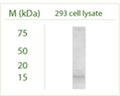
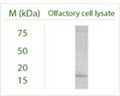
Our Anti-Microtubule-associated proteins 1A/1B light chain 3B (MAP1LC3 B) rabbit polyclonal primary antibody detects human and rat Microtubule-associated proteins 1A/1B light chain 3B (MAP1LC3 B), and is whole serum. It is validated for use in IHC-Frozen, WB.
SKU: R-155-100
Ships: 1-2 business days
Product Details
Microtubule-associated proteins 1A/1B light chain 3B (MAP1LC3 B)
MAP1LC3B is a subunit of neuronal microtubule-associated MAP1A and MAP1B proteins, which are involved in microtubule assembly and important for neurogenesis. MAP1LC3B is probably involved in formation of autophagosomal vacuoles (autophagosomes). SUBCELLULAR LOCATION: LC3-I: Cytoplasm. LC3-II: Intracytoplasmic membrane; lipid-anchor. Cytoplasmic vesicle; autophagosome; autophagosomal membrane; lipid-anchor. LC3-II binds to the autophagic membranes. TISSUE SPECIFICITY: Most abundant in heart, brain, skeletal muscle and testis. Little expression observed in liver. PTM: The precursor molecule is cleaved by APG4B/ATG4B to form LC3-I. This is activated by APG7L/ATG7, transferred to ATG3 and conjugated to phospholipid to form LC3-II. SIMILARITY: Belongs to the MAP1 LC3 family.
Whole serum
Polyclonal
Mixed
IHC, WB
Rabbit
A synthetic peptide (FEQRVEDVRLIC) corresponding to the N-terminal of human MAP1LC3 B protein conjugated to Blue Carrier Protein has been used as the immunogen. The peptide is homologous with the corresponding sequence derived from mouse and rat MAP1LC3 B protein.
Human
Human, Rat
Spin vial briefly before opening. Reconstitute in 100 µL sterile-filtered, ultrapure water. Centrifuge to remove any insoluble material. After reconstitution keep aliquots at -20°C for a higher stability, and at 2-8°C with an appropriate antibacterial agent. Glycerol (1:1) may be added for an additional stability. Avoid repetitive freeze/thaw cycles.
Lyophilized
WB: 1:100-1:1000
IHC: 1:100-1:1000
IHC: 1:100-1:1000
Unconjugated
IHC, WB and ELISA confirmed the specificity for MAP1LC3 B. Human, rat. Other species not yet tested.
For research use only.
United States
12 months after date of receipt (unopened vial).
MAP1 light chain 3-like protein 2; Microtubule-associated proteins 1A/1B light chain 3B; ATG8F; Microtubule-associated protein 1 light chain 3 beta; MAP1A/1BLC3; MAP1A/MAP1B LC3 B; MAP1LC3B-a; MAP1A/1B light chain 3 B; MAP1A/MAP1B light chain 3 B; Autophagy-related protein LC3 B; autophagy-related ubiquitin-like modifier LC3 B; APG8b; MAP-1LC3B; MAP1LC3B; MAP1ALC3
Q9GZQ8
UniProt Summary: Ubiquitin-like modifier involved in formation of autophagosomal vacuoles (autophagosomes). Plays a role in mitophagy which contributes to regulate mitochondrial quantity and quality by eliminating the mitochondria to a basal level to fulfill cellular energy requirements and preventing excess ROS production. In response to cellular stress and upon mitochondria fission, binds C-18 ceramides and anchors autophagolysosomes to outer mitochondrial membranes to eliminate damaged mitochondria. While LC3s are involved in elongation of the phagophore membrane, the GABARAP/GATE-16 subfamily is essential for a later stage in autophagosome maturation. Promotes primary ciliogenesis by removing OFD1 from centriolar satellites via the autophagic pathway. Through its interaction with the reticulophagy receptor TEX264, participates in the remodeling of subdomains of the endoplasmic reticulum into autophagosomes upon nutrient stress, which then fuse with lysosomes for endoplasmic reticulum turnover. Upon nutrient stress, directly recruits cofactor JMY to the phagophore membrane surfaces and promotes JMY's actin nucleation activity and autophagosome biogenesis during autophagy.
81631
25°C (ambient)