
Anti-Capsaicin receptor (TrpV1) Antibody
Our Anti-Capsaicin receptor (TrpV1) rabbit polyclonal primary antibody detects human and rat Capsaicin receptor (TrpV1), and is whole serum. It is validated for use in IHC-Frozen.
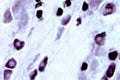
Detection of capsaicin receptor in small neurons in rat dorsal root ganglion (DRG) using rabbit antibody to human capsaicin receptor (608-621): whole serum, catalogue number R-076-100, at 1:2000 dilution. The rat tissue was prepared by perfusion fixation with 4% formaldehyde containing 10% saturated picric acid in buffered saline. Frozen sections (40 µm) were used and the secondary antibody was conjugated with HRP. Rat spinal cord prepared in the same way also shows a high specific stain with little background.
Click on image to zoom
SKU: R-076-100
Ships: 1-2 business days
Product Details
Capsaicin receptor (TrpV1)
Responses evoked by low pH and heat, and capsaicin can be antagonized by capsazepine. SIMILARITY: Belongs to the transient receptor family. TrpV subfamily. SIMILARITY: Contains 3 ANK repeats.
Whole serum
Polyclonal
Mixed
IHC
Rabbit
A synthetic peptide (PSESTSHRWRGPA) of human capsaicin receptor protein (aa: 608-621) conjugated to KLH has been used as the antigen.
Human
Human, Rat
Spin vial briefly before opening. Reconstitute in 100 µL sterile-filtered, ultrapure water. Centrifuge to remove any insoluble material. After reconstitution keep aliquots at -20°C for a higher stability, and at 2-8°C with an appropriate antibacterial agent. Glycerol (1:1) may be added for an additional stability. Avoid repetitive freeze/thaw cycles.
Lyophilized
IHC: 1:1000-1:2000
Unconjugated
Specificity was confirmed by IHC using frozen sections of rat dorsal root ganglia (DRG) and spinal cord. Due to sequence homology, similar staining is predicted in human DRG and spinal cord. Human, rat. Other species have not yet been tested.
For research use only.
United States
12 months after date of receipt (unopened vial).
capsaicin receptor; Transient receptor potential cation channel subfamily V member 1; transient receptor potential vanilloid 1a; TrpV1; transient receptor potential vanilloid 1b; osm-9-like TRP channel 1; OTRPC1; vanilloid receptor subtype 1; Vanilloid receptor 1; VR1; VR-1
Q8NER1
UniProt Summary: Non-selective calcium permeant cation channel involved in detection of noxious chemical and thermal stimuli. Seems to mediate proton influx and may be involved in intracellular acidosis in nociceptive neurons. Involved in mediation of inflammatory pain and hyperalgesia. Sensitized by a phosphatidylinositol second messenger system activated by receptor tyrosine kinases, which involves PKC isozymes and PCL. Activated by vanilloids, like capsaicin, and temperatures higher than 42 degrees Celsius. Upon activation, exhibits a time- and Ca(2+)-dependent outward rectification, followed by a long-lasting refractory state. Mild extracellular acidic pH (6.5) potentiates channel activation by noxious heat and vanilloids, whereas acidic conditions (pH <6) directly activate the channel. Can be activated by endogenous compounds, including 12-hydroperoxytetraenoic acid and bradykinin. Acts as ionotropic endocannabinoid receptor with central neuromodulatory effects. Triggers a form of long-term depression (TRPV1-LTD) mediated by the endocannabinoid anandamine in the hippocampus and nucleus accumbens by affecting AMPA receptors endocytosis.
7442
25°C (ambient)

