
Anti-Adenosine triphosphate (ATP)- ase (ATPase) Antibody
Our Anti-Adenosine triphosphate (ATP)- ase (ATPase) rabbit polyclonal primary antibody detects human and rat Adenosine triphosphate (ATP)- ase (ATPase), and is whole serum. It is validated for use in IHC-Frozen.
SKU: R-072-100
Ships: 1-2 business days
Product Details
Adenosine triphosphate (ATP)- ase (ATPase)
CATALYTIC ACTIVITY: ATP + H2O = ADP + phosphate. SUBCELLULAR LOCATION: Membrane; multi-pass membrane protein (By similarity). ALTERNATIVE PRODUCTS: 2 named isoforms produced by alternative splicing. SIMILARITY: Belongs to the cation transport ATPase (P-type) family. Type V subfamily.
Whole serum
Polyclonal
Mixed
IHC
Rabbit
A synthetic peptide (C-DDVHRSRHGLSLQDQ) as part of human ATP13A2 protein (aa: 195-209) conjugated to KLH
Human
Human, Rat
Spin vial briefly before opening. Reconstitute in 100 µL sterile-filtered, ultrapure water. Centrifuge to remove any insoluble material. After reconstitution keep aliquots at -20°C for a higher stability, and at 2-8°C with an appropriate antibacterial agent. Glycerol (1:1) may be added for an additional stability. Avoid repetitive freeze/thaw cycles.
Lyophilized
IHC: 1:500-1:2000
Unconjugated
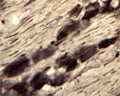
Immunohistochemistry shows specific staining for ATPase. This antiserum is known to react with rat ATPase. Other species have not yet tested.
For research use only.
United States
12 months after date of receipt (unopened vial).
cation-transporting ATPase 13A2; Probable cation-transporting ATPase 13A2; CLN12; EC 3.6.3.-; KRPPD; ATP13A2; PARK9; SPG78; ATPase 13A2; ATPase type 13A2
Q9NQ11
UniProt Summary: ATPase which acts as a lysosomal polyamine exporter with high affinity for spermine. Also stimulates cellular uptake of polyamines and protects against polyamine toxicity. Plays a role in intracellular cation homeostasis and the maintenance of neuronal integrity. Contributes to cellular zinc homeostasis. Confers cellular protection against Mn(2+) and Zn(2+) toxicity and mitochondrial stress. Required for proper lysosomal and mitochondrial maintenance. Regulates the autophagy-lysosome pathway through the control of SYT11 expression at both transcriptional and post-translational levels. Facilitates recruitment of deacetylase HDAC6 to lysosomes to deacetylate CTTN, leading to actin polymerization, promotion of autophagosome-lysosome fusion and completion of autophagy. Promotes secretion of exosomes as well as secretion of SCNA via exosomes. Plays a role in lipid homeostasis.
23400
25°C (ambient)

