Anti-Activity-regulated gene 3.1 protein homolog (Arg3.1) Antibody
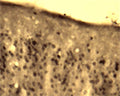
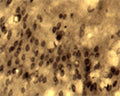
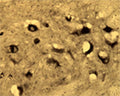
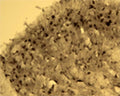
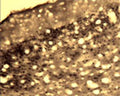
Our Anti-Activity-regulated gene 3.1 protein homolog (Arg3.1) rabbit polyclonal primary antibody detects human, mouse, and rat Activity-regulated gene 3.1 protein homolog (Arg3.1), and is IgG. It is validated for use in IHC-Frozen.
SKU: R-173-500
Ships: 1-2 business days
Product Details
Activity-regulated gene 3.1 protein homolog (Arg3.1)
Arc (also termed activity-regulated cytoskeleton-associated protein or Arg3.1), is an effector immediate early gene whose upregulation has been demonstrated during events of synaptic plasticity. Arg3.1 expression is detectable in neuronal cell bodies and dendrites in the brain regions including striatum and cortex hippocampus, hypothalamus, amygdala.
IgG
Polyclonal
IgG
IHC
Rabbit
A synthetic peptide from the C terminal of human Arg3.1 protein (ARC protein) conjugated to Blue Carrier Protein. The sequence is homologous with mouse and rat form of Arg3.1.
Human
Human, Mouse, Rat
Spin vial briefly before opening. Reconstitute in 500 µL sterile-filtered 1X PBS, pH 7.2-7.6. Centrifuge to remove any insoluble material. After reconstitution keep aliquots at -20°C for a higher stability, and at 2-8°C with an appropriate antibacterial agent. Glycerol (1:1) may be added for an additional stability. Avoid repetitive freeze/thaw cycles.
Lyophilized
Protein G purified IgG
Lyophilized from a solution containing PBS pH 7.4
IHC: 2-4 µg/mL
Unconjugated
Specific for Arg3.1. Rat and mouse. Other species not yet tested.
For research use only.
United States
12 months after date of receipt (unopened vial).
Arg3.1; ARC; ARC/ARG3.1; activity regulated cytoskeletal-associated protein; activity-regulated gene 3.1 protein homolog; RCA/ARG3.1
Q7LC44
UniProt Summary: Master regulator of synaptic plasticity that self-assembles into virion-like capsids that encapsulate RNAs and mediate intercellular RNA transfer in the nervous system. ARC protein is released from neurons in extracellular vesicles that mediate the transfer of ARC mRNA into new target cells, where ARC mRNA can undergo activity-dependent translation. ARC capsids are endocytosed and are able to transfer ARC mRNA into the cytoplasm of neurons. Acts as a key regulator of synaptic plasticity: required for protein synthesis-dependent forms of long-term potentiation (LTP) and depression (LTD) and for the formation of long-term memory. Regulates synaptic plasticity by promoting endocytosis of AMPA receptors (AMPARs) in response to synaptic activity: this endocytic pathway maintains levels of surface AMPARs in response to chronic changes in neuronal activity through synaptic scaling, thereby contributing to neuronal homeostasis. Acts as a postsynaptic mediator of activity-dependent synapse elimination in the developing cerebellum by mediating elimination of surplus climbing fiber synapses. Accumulates at weaker synapses, probably to prevent their undesired enhancement. This suggests that ARC-containing virion-like capsids may be required to eliminate synaptic material. Required to transduce experience into long-lasting changes in visual cortex plasticity and for long-term memory. Involved in postsynaptic trafficking and processing of amyloid-beta A4 (APP) via interaction with PSEN1. In addition to its role in synapses, also involved in the regulation of the immune system: specifically expressed in skin-migratory dendritic cells and regulates fast dendritic cell migration, thereby regulating T-cell activation.
23237
25°C (ambient)