
Anti-Calcitonin Gene Related Peptide (CGRP) Antibody (4901)
Our Anti-Calcitonin Gene Related Peptide (CGRP) primary antibody from PhosphoSolutions is mouse monoclonal. It detects human and rat Calcitonin Gene Related Peptide (CGRP) and is Protein G purified. It is great for use in ICC.
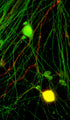
SKU: 311-CGRP
Ships: 1-2 business days
Product Details
Calcitonin Gene Related Peptide (CGRP)
Calcitonin Gene Related Peptide [CGRP] is a 37 amino acid peptide and is the most potent endogenous vasodilator currently known (Brain et al.,1985). CGRP is primarily produced in nervous tissue, however, its receptors are expressed throughout the body. CGRP is also strongly implicated in the vasodilatory effect of endogenous cannabinoid anandamide in the brain. This effect was found to be antagonized by capsazepine. CGRP is also currently a major target of research in regards to factors effecting the onset of migraine headaches (Edvinsson L., 2003). CGRP antibodies have been used successfully in immunoneutralization (Wong et al., 1993).
Protein G Purified
Monoclonal
4901
IgG2a
ELISA, ICC
Mouse
CALCA
Purified rat alpha-CGRP.
Rat
Human, Rat
AB_2492054
Storage at -20°C is recommended, as aliquots may be taken without freeze/thawing due to presence of 50% glycerol. Stable for at least 1 year at -20°C.
Liquid
Protein G purified culture supernatant.
10 mM HEPES (pH 7.5), 150 mM NaCl, 100 µg per ml BSA and 50% glycerol.
WB: not recommended
ICC: 1:50-1:100
ICC: 1:50-1:100
Unconjugated
Specific for Calcitonin Gene Related Peptide. Also recognizes rat beta-CGRP and human alpha-CGRP (10-fold less sensitivity compared to rat alpha-CGRP). Suggested positive controls are dorsal root ganglia, pancreas and gut.
ICC performed on each lot.
For research use only. Not intended for therapeutic or diagnostic use. Use of all products is subject to our terms and conditions, which can be viewed on our website.
After date of receipt, stable for at least 1 year at -20°C.
Calcitonin/calcitonin related polypeptide alpha; Alpha type CGRP; Beta type CGRP; CALC1; CALC2; CALCA; CALCB; Calcitonin 1; Calcitonin 2; Calcitonin gene related peptide I; Calcitonin gene related peptide II; Calcitonin related polypeptide alpha; Calcitonin related polypeptide beta; CGRP; CGRP I; CGRP II; CGRP1; CGRP2; CT; Katacalcin; KC
P01256
UniProt Summary: CGRP1/CALCA is a peptide hormone that induces vasodilation mediated by the CALCRL-RAMP1 receptor complex (PubMed:1318039, PubMed:33602864, PubMed:9620797). Dilates a variety of vessels including the coronary, cerebral and systemic vasculature. Its abundance in the CNS also points toward a neurotransmitter or neuromodulator role (PubMed:3492492). It also elevates platelet cAMP (PubMed:1318039). CGRP1 can also bind and activate CALCR-RAMP1 (AMYR1) receptor complex (PubMed:38603770). {ECO:0000269|PubMed:1318039, ECO:0000269|PubMed:33602864, ECO:0000269|PubMed:3492492, ECO:0000269|PubMed:38603770, ECO:0000269|PubMed:9620797}.
24241
Blue Ice
General References
- Brain SD, Williams TJ, Tippins JR, Morris HR, MacIntyre I (1985) Calcitonin gene related peptide is a potent vasodilator. Nature 313 (5997): 54-6. PMID: 3917554
- Edvinsson, L., 2003. New therapeutic target in primary headaches–blocking the CGRP receptor. Expert opinion on therapeutic targets, 7(3), pp.377-383. PMID: 12783573
- Wong HC, Tache’ Y, Lloud KCK, Yang H, Sternini C, Holzer P, Walsh JH (1993) Monoclonal antibody to rat alpha-CGRP: production, charactrization, and in vivo immunoneutralization activity. Hybridoma. 12:93-106. PMID: 8095920

